My role: Research, UX Design, Visual Design, Copywriting, Prototyping
Release Date
Release date: March 2024
(Shifts in the company's direction, alterations to the business model, and team reductions may have an impact on both the proposed designs and the scheduled release date.)
I'm open to discussing the valuable insights gained during the development of this project, including compromises and changes in direction. Let's connect for a more in-depth conversation.
About Catch
Catch is a payment method that allows you to pay for online purchases directly from your bank account or debit card and earn an average of 10% in store credit each time. Brands save on credit card fees, passing those savings to users as store credit, fostering repeat shopping.
User persona:

Problem Definition
User: Despite initially being drawn to Catch's credit-back feature while shopping at Everlane, Sam frequently experiences her credits expiring due to a few reasons:
Forgets about the credit expiration date
Has Insufficient credit to incentivize a purchase
Has exhausted all purchase options at Everlane and wishes she could use credit towards another Catch brand.
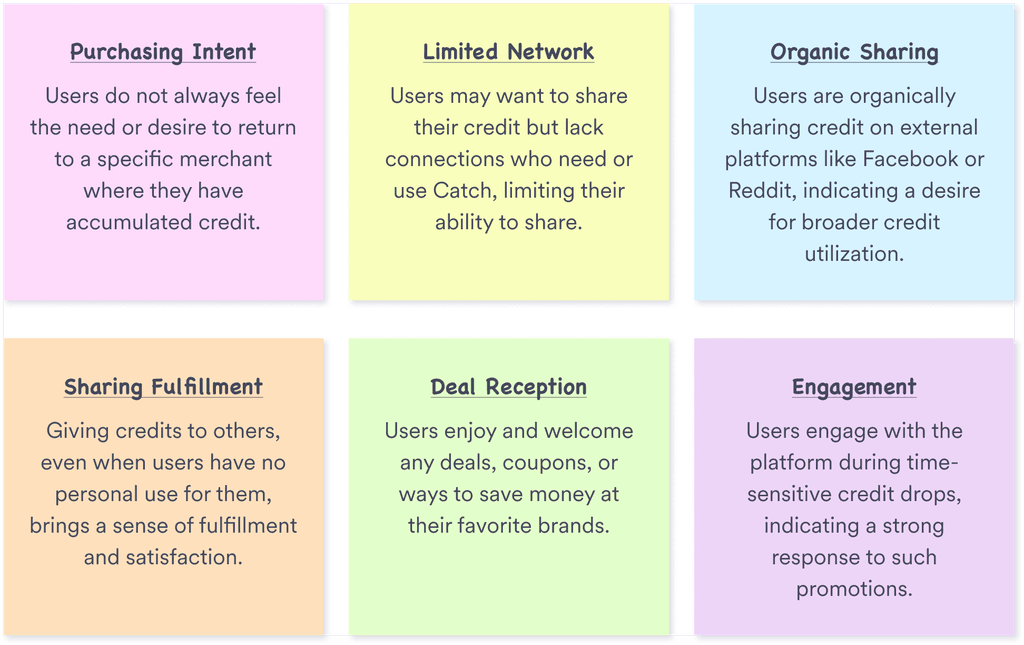
Do not know anybody they can share their credit with to avoid leaving it unused.
Business: The lack of repeated engagement compromises the value proposition promised by Catch to its partners, potentially leading to dissatisfaction and a decrease in brand retention and acquisition. Consequently, this impacts the longevity and success of Catch as a business, as sustained user engagement is crucial for its growth and sustainability.
Discovery Phase Findings
These insights are derived from a thorough analysis of user behavior, encompassing both moderated and unmoderated user interviews, usability testing sessions, and internal data.
Hypothesis
We propose that by enabling users to share unwanted earned credits with others in the network, several positive outcomes may occur:
Increased Credit Utilization and Repeat Orders: Receiving users are likely to redeem credits intentionally, choosing those that align with their shopping preferences or desired merchants, thereby boosting credit utilization and encouraging repeat orders.
Higher Weekly Active Users (WAU) and Monthly Active Users (MAU): Users will have a reason to visit Catch more frequently to explore available credits that match their shopping needs, contributing to higher engagement metrics.
Enhanced New User Adoption: Users will be motivated to invite friends to join Catch, knowing they can immediately benefit from available credits, thereby facilitating new user adoption.
**We anticipate that this feature may not significantly drive new cross-network orders, as users are more inclined to claim rewards from brands they already favor or have existing credits with. We will monitor cross-network orders as a learning metric to gauge the extent of brand discovery facilitated by credit pools.
Current Design Pain Points
#1 Pain Point:
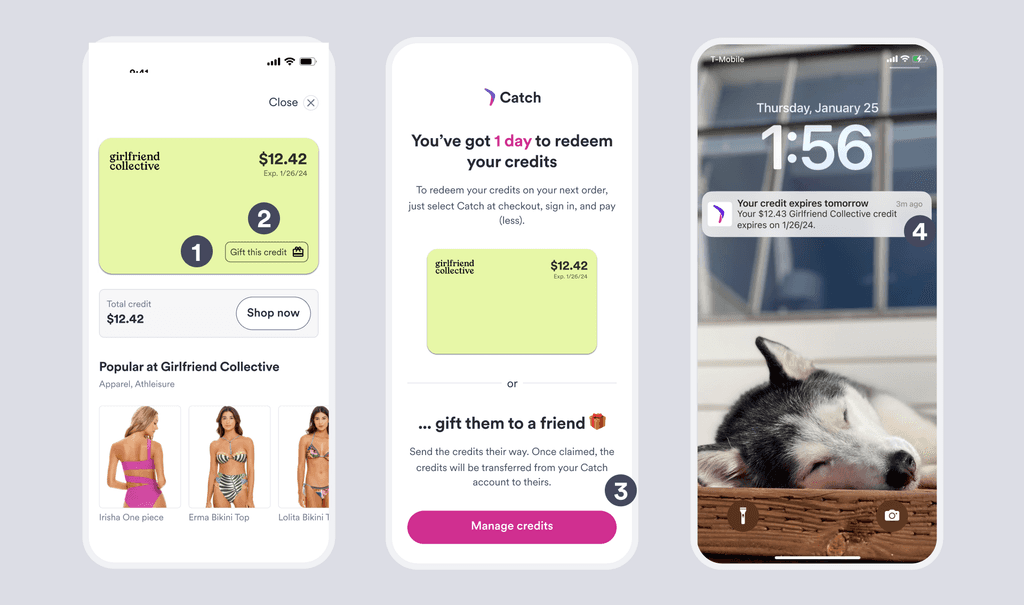
Users lack the ability to share credits with the community directly, with only gifting as the available option.
#2 Pain Point:
To gift credits, users must choose someone they know, necessitating an interest in both the brand and Catch as an intermediary.
#3 Pain Point:
Email notifications lack interactivity, requiring users to switch environments and perform multiple clicks to take desired actions.
#4 Pain Point:
Notifications lack dynamism and explanatory content, leading users to overlook options like gifting or other actions for their credits.
Ideation
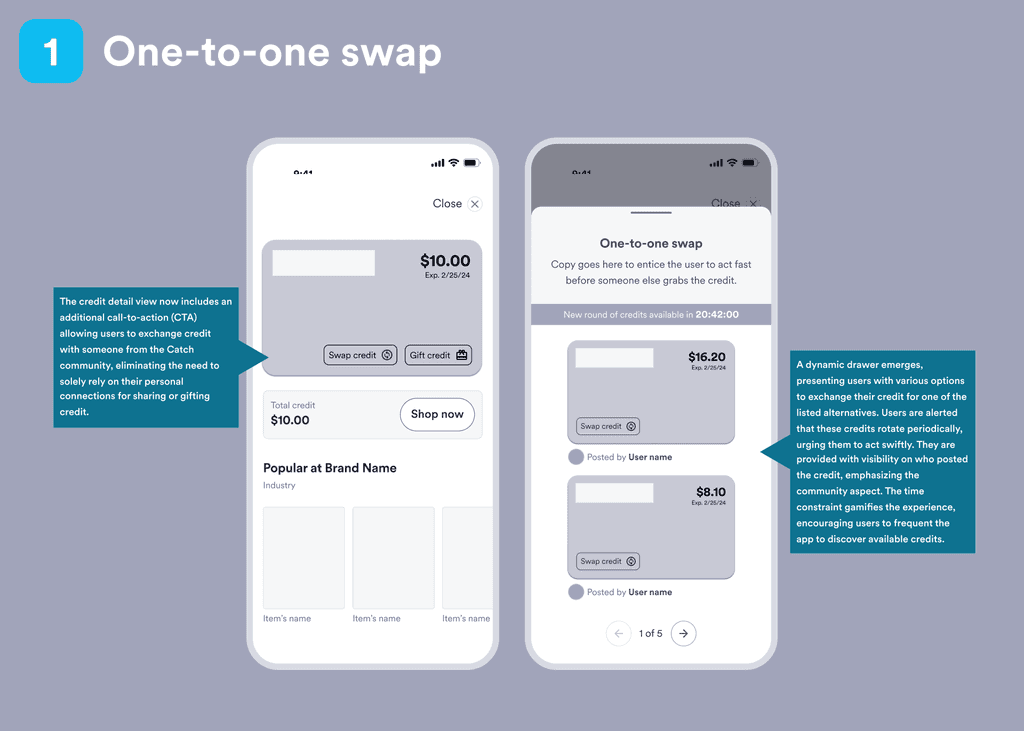
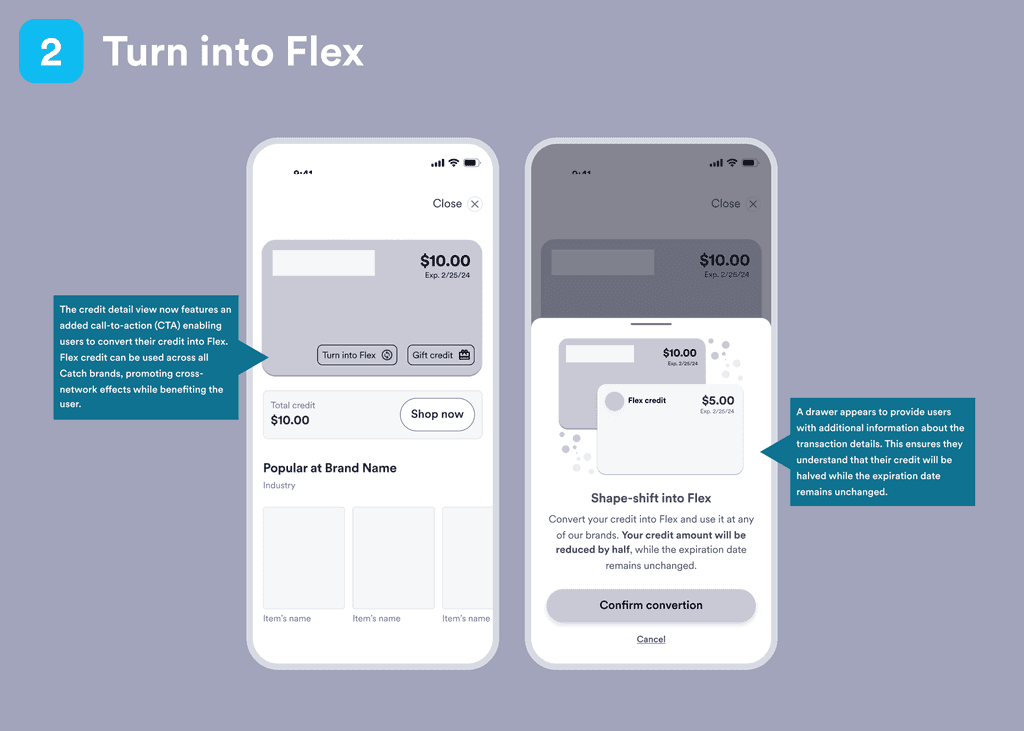
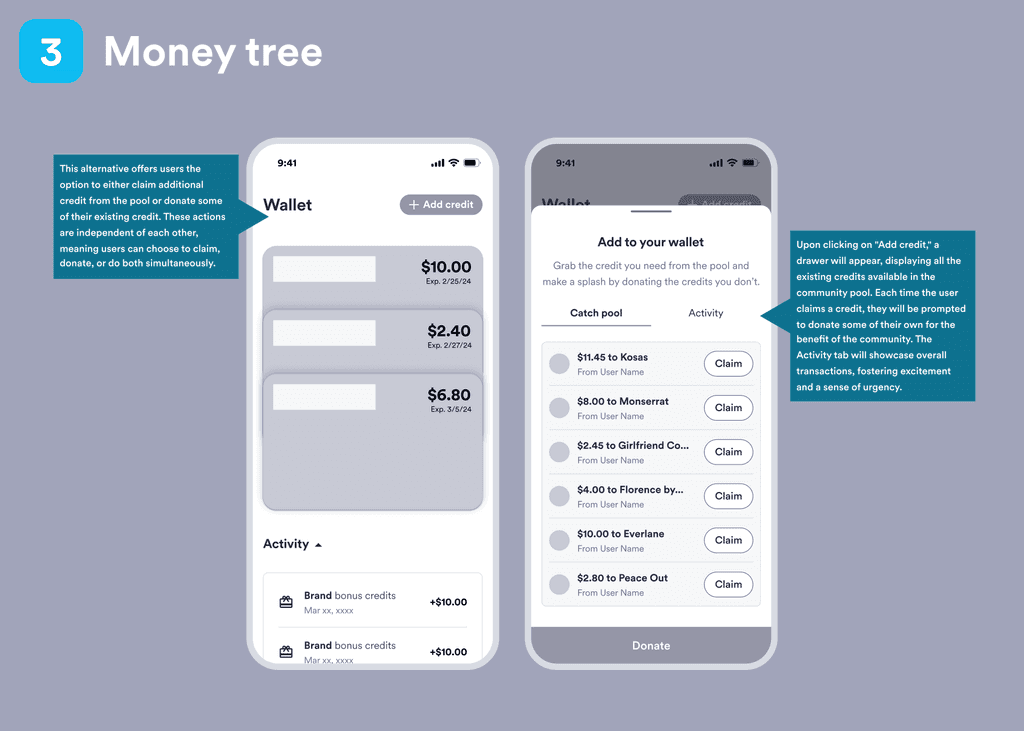
During the ideation phase, three distinctive routes were explored. Each of these approaches was designed to address the user problem of credit utilization while also adding an element of excitement and fostering a sense of community.
User Research Findings
Moderated user interviews were conducted to independently test all three routes and gather insights from current Catch users. This approach ensured alignment with their needs and unveiling of existing concerns.
1-Trading Marketplace
Users highly value a credit marketplace. The majority have already engaged in off-Catch credit trading initiatives, with 100% expressing willingness to participate more if made more convenient and accessible.
2- Goodwill
Users expressed a willingness to altruistically give away their credit to help others when they have no personal use for them or if their inner circle doesn’t need them. This act of giving brings a sense of fulfillment.
3-Credit Utilization
Users' frustration regarding expired credits appears to be associated with the specific brand and the amount of credit. The impact is more pronounced when the expired credits are significant and are for one of their favorite brands.
4- Swapping Credit
This option presented challenges with its learning curve. Users were confused about the logic, uncertain if it was a dollar-to-dollar or credit-per-credit exchange. Additionally, users were not keen on the gamification aspect.
5-Turn into Flex
Users overwhelmingly preferred converting their credit into Flex over other options. The majority understood the limitations and rationale behind halving the credit, although one participant expressed concern about this aspect.
6- Money Tree
Its simplicity came through. Most users grasped this feature, and any confusion primarily arose primarily due to copy-related issues rather than functionality. User comprehend that claiming might have certain limitations.
Technical Limitations
Insights gathered from stakeholders, encompassing Product and Engineering, unveiled essential technical constraints that influenced the proposed design direction.
1-Financial Hurdle
Converting credit into Flex, even with a halved value, contradicts our commitment to driving repeated business for merchants and is not financially feasible.
2- Privacy Challenges
Sharing any user information, even if it's just their name, could potentially violate their privacy. This requires consultation with the Legal department.
3-Emphasizing Donating
We should enhance the promotion of donations across various surfaces to ensure the sustainability of the credit pool and minimize the need for continuous funding.
4- Max Claim Logic
Limitations on the amount of credits users can claim from the pool and expiration of these credits once claimed needs to be set/logic defined with Product.
5-Added Complexity
Developing the one-to-one swap feature may present significant challenges for the engineering team, as it involves numerous intricate components.
6- Funding Kickstart
To initiate kickstart any of these initiatives, we may need to provide initial funding and continuously monitor the pools. This should be financially feasible.
Proposed Design Direction
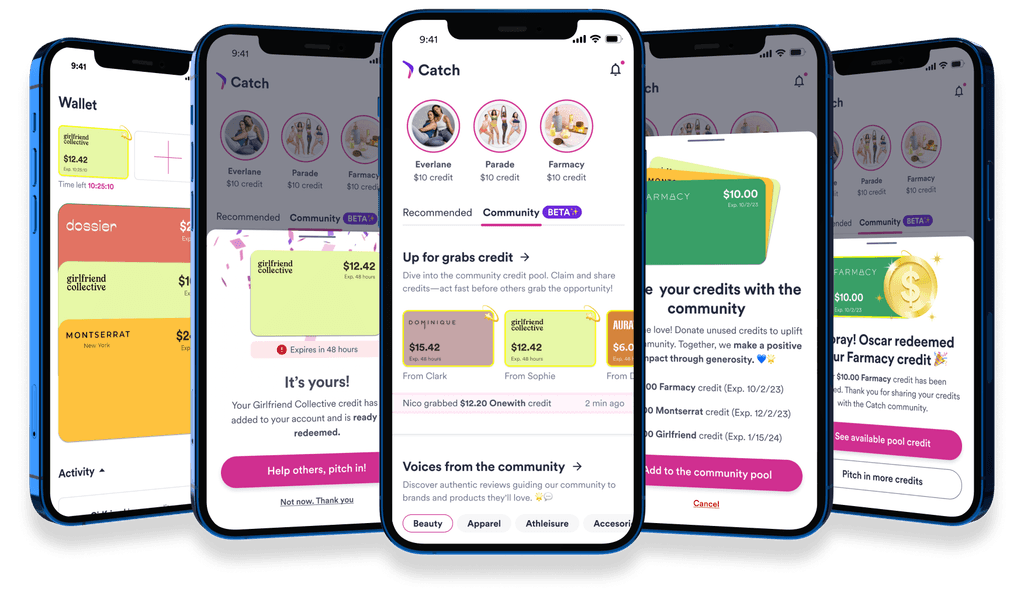
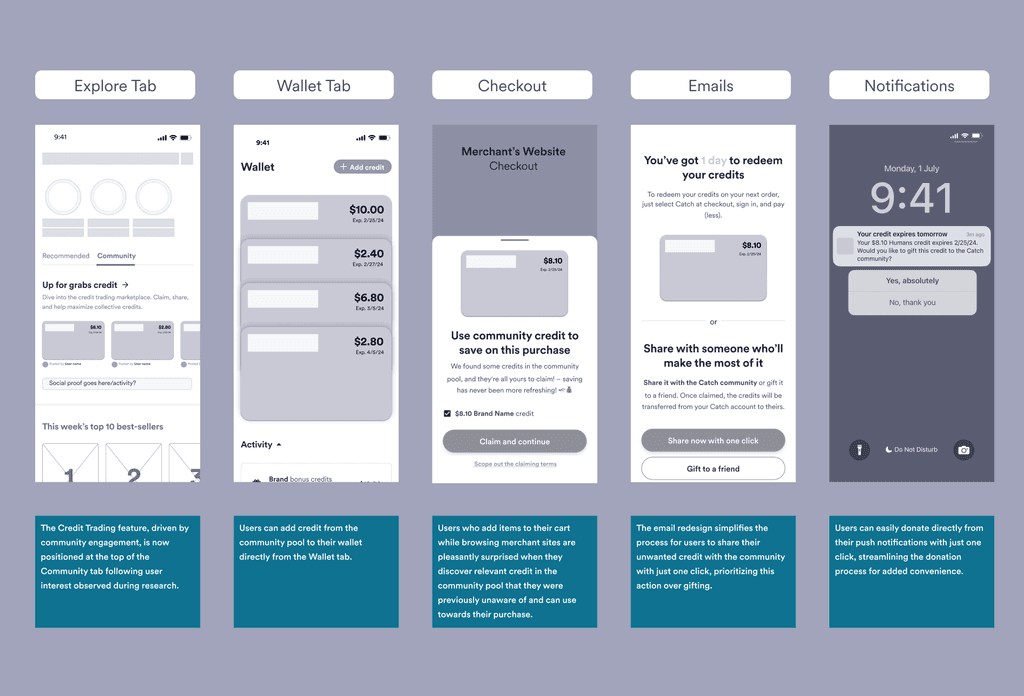
Taking into account user feedback and technical constraints, we opted to continue developing the "Money Tree" concept expanding it to many surfaces across the product to solve the problem of credit utilization and facilitate (as much as possible) the donation of unwanted credit.
Proposed Final Look
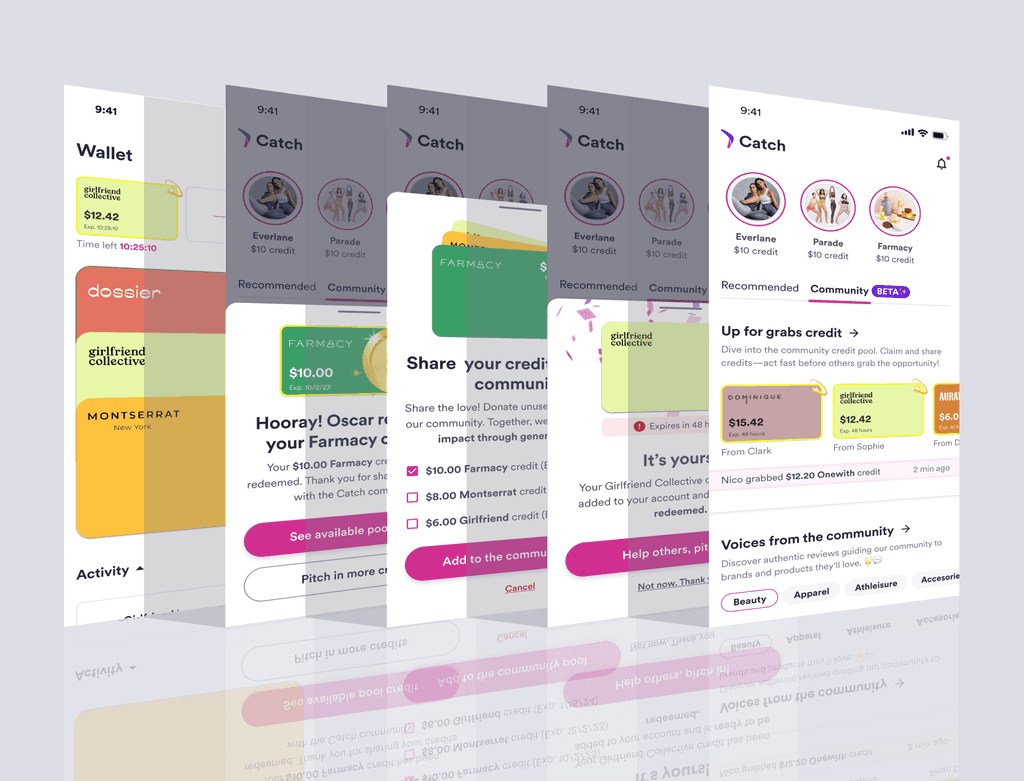
Another round of stakeholder feedback revealed significant challenges in implementing dynamic push notifications for the MVP, as well as hurdles in integrating the offering pool credit during checkout. As a result, both features were prioritized and moved to the roadmap for future iterations.
Design Solution Rationale
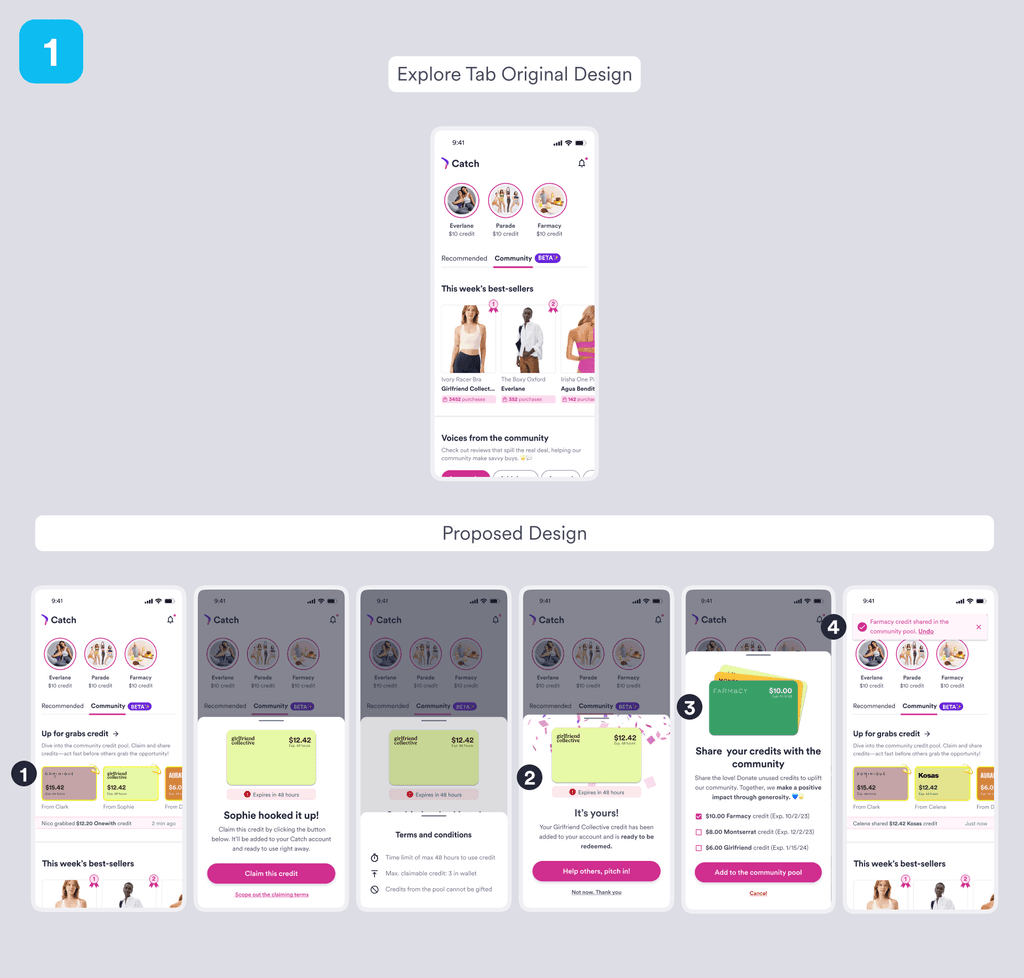
1-Enhanced Credit Visibility: Community credits are prominently featured to improve user discovery and engagement, ensuring users are aware of their available options and can easily access them when needed.
2-Increased Purchase Incentives: Users can now claim credits from the pool and add them to their existing ones in their wallet, thereby building a stronger store credit that can incentivize a purchase.
3-Expanded Purchase Options: If a user has exhausted all options at a particular brand where they have credit, they now have the option to donate their credit to the community for a feel-good moment. This allows them to contribute to the community while also being able to claim credit for another brand they may want to try.
4-Enhanced Credit Sharing: Users now have the ability to share unwanted or about-to-expire credit with the larger community if they don't have anybody in their close network they can share it with.
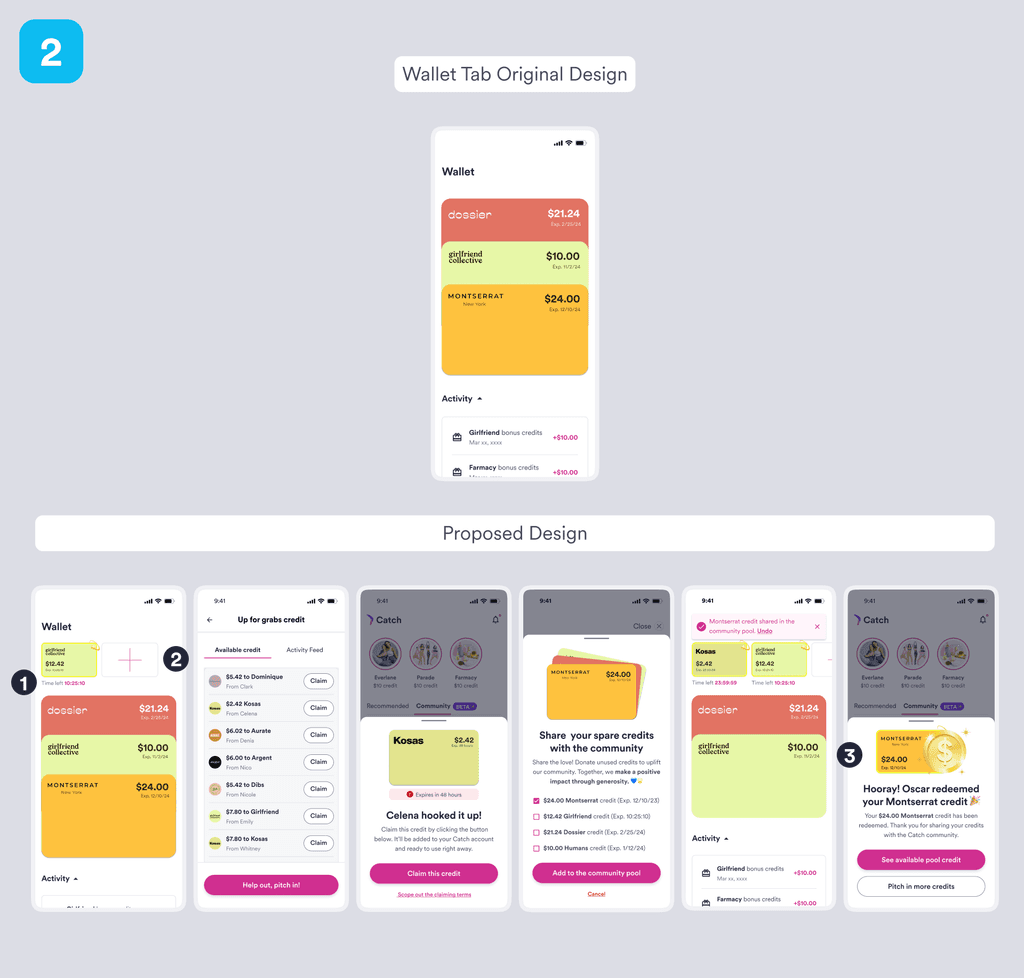
1-Urgency in Credit Utilization: The limited time availability of the credit encourages users to take swift action, aligning with our commitment to partners for repeated business from users.
2-Anti-Fraud Measures: Users are allowed to add up to three credits at a time, mitigating the risk of fraud and abuse while maintaining security.
3-Community Engagement: Users receive notifications when someone in the community uses the credit they shared, fostering a tight-knit community and encouraging continuous donations to sustain the credit pool without requiring funding from Catch.
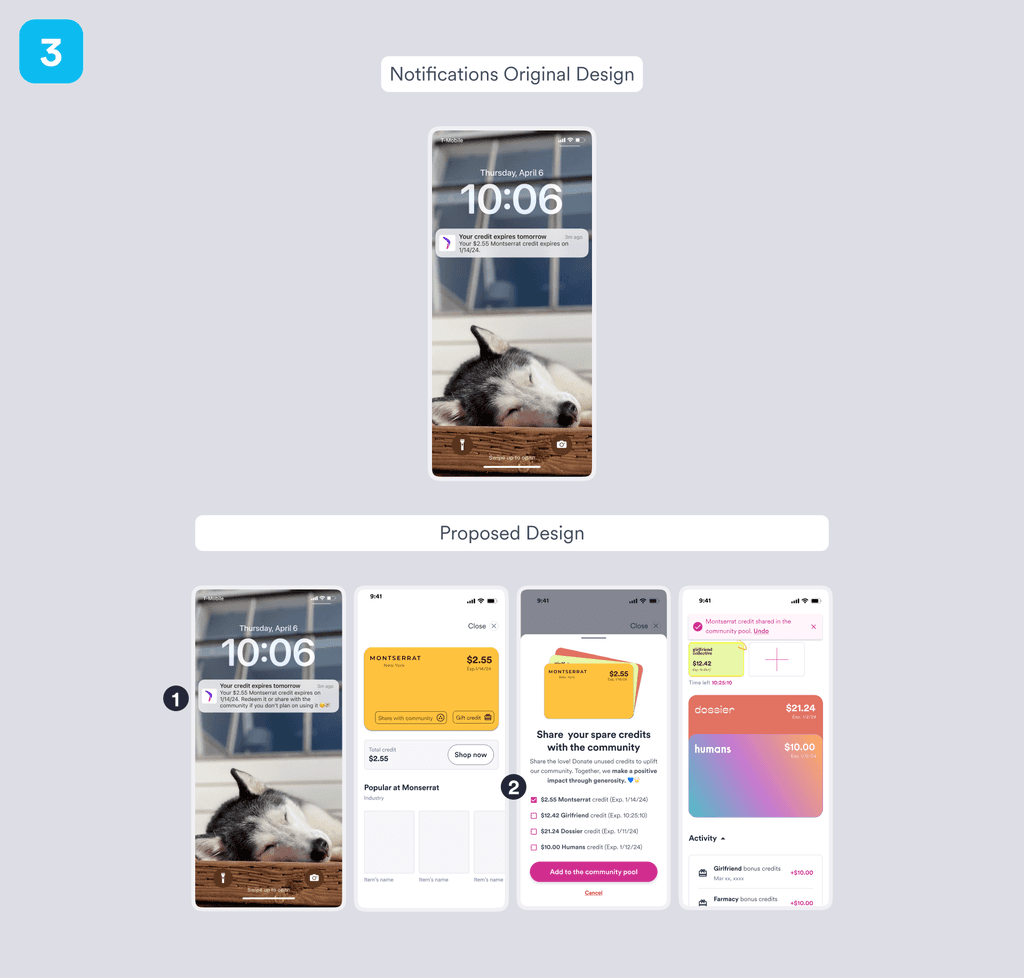
1-Optimizing Credit Utilization: Alerts users of available options to prevent credits from expiring unused.
2-Convenience in Sharing: Allows users to select multiple credits they anticipate going unused from a centralized location, simplifying the process, and facilitating donation with just one click.
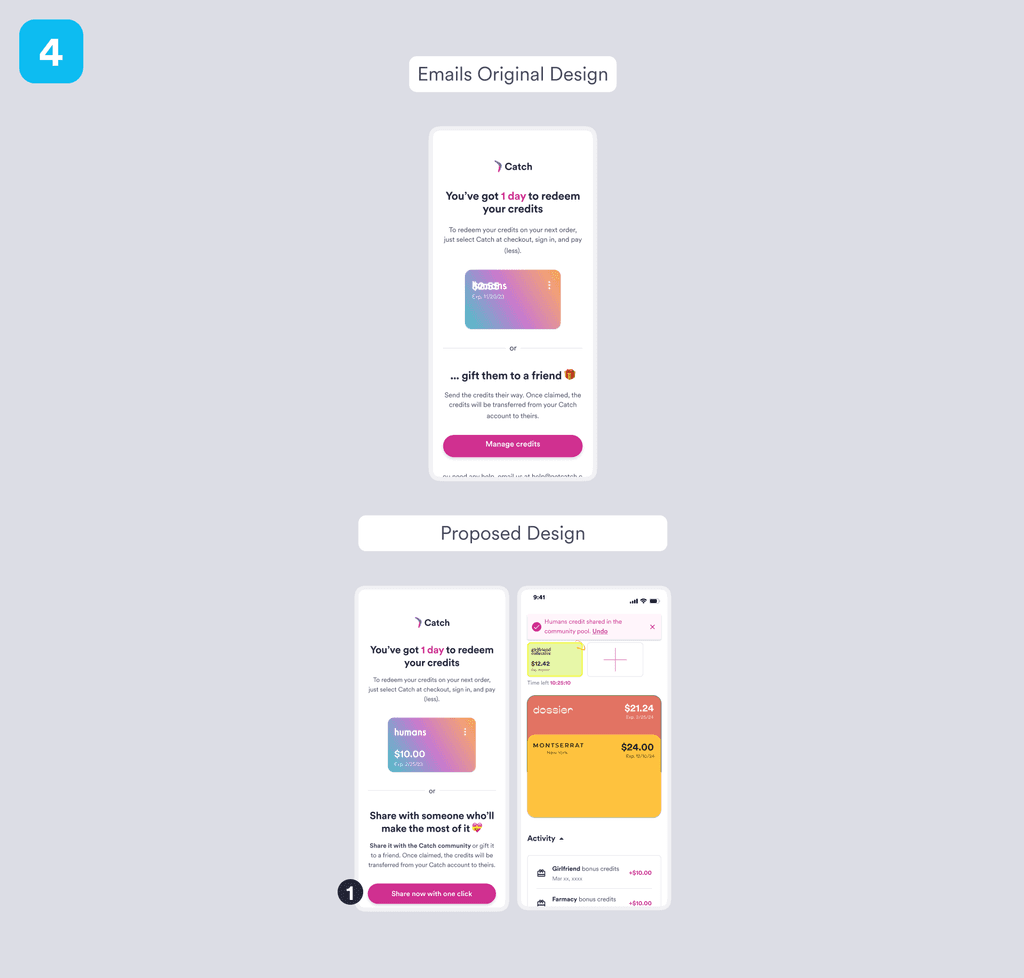
1-Optimizing Credit Utilization: Users can effortlessly donate their unused credits directly from the reminder email with just one click, effectively addressing the credit expiration issue.