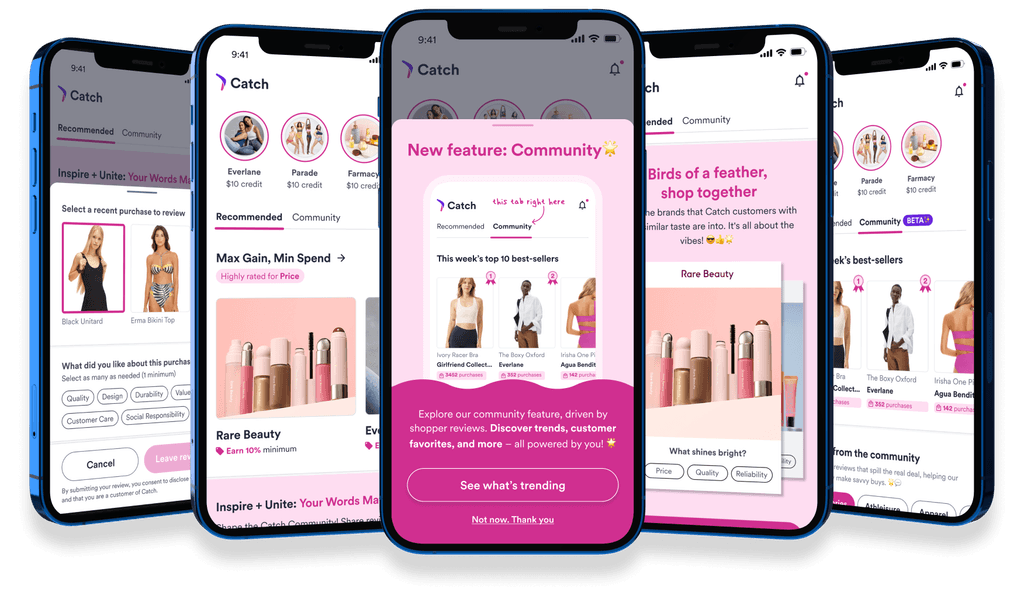
My role: Research, UX Design, Visual Design, Copywriting, Prototyping
Release Date
Release date: March 2024
(Shifts in the company's direction, alterations to the business model, and team reductions may have an impact on both the proposed designs and the scheduled release date.)
I'm open to discussing the valuable insights gained during the development of this project, including compromises and changes in direction. Let's connect for a more in-depth conversation.
About Catch
Catch is a payment method that allows you to pay for online purchases directly from your bank account or debit card and earn an average of 10% in store credit each time. Brands save on credit card fees, passing those savings to users as store credit, fostering repeat shopping.
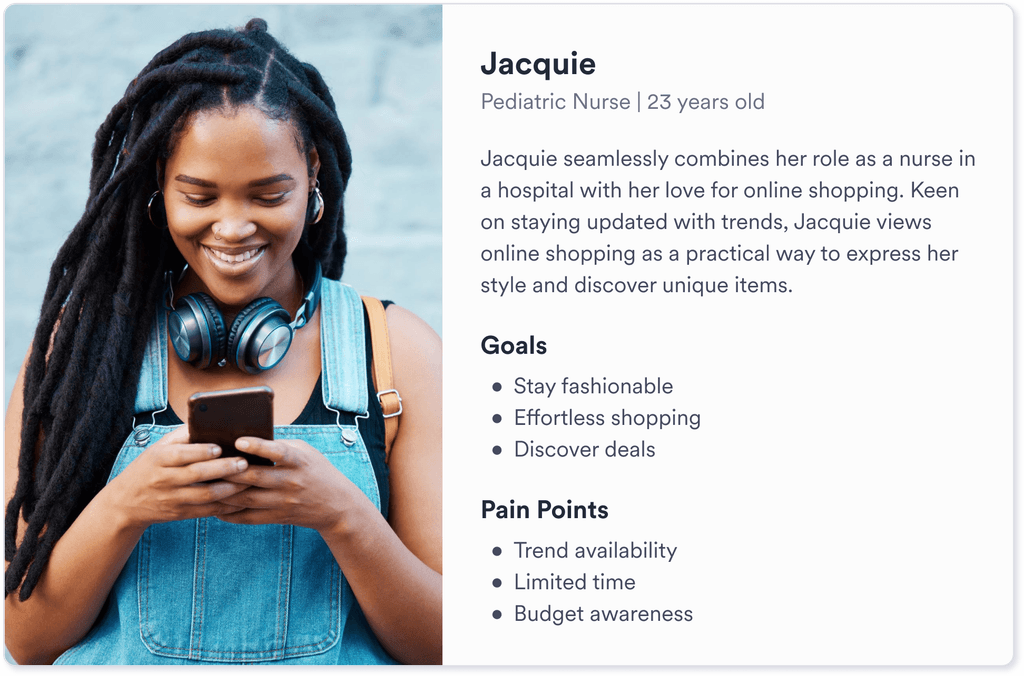
User persona:
Problem Definition
User: In Jacquie's journey with Catch, she values the comfort of familiar brands, with Girlfriend Collective being her go-to. However, the challenge arises when she has explored all that Girlfriend Collective offers. The Catch platform doesn't effectively guide her in discovering new brands or products. This leaves her relying on co-workers' recommendations in Slack threads or seeking reviews on external platforms like Instagram and TikTok.
Business: The user's dependency on external recommendations raises concerns about Catch's capacity to attract and retain customers. With limitations in guiding users to discover new brands or products, there is a potential impact on overall user satisfaction and engagement.
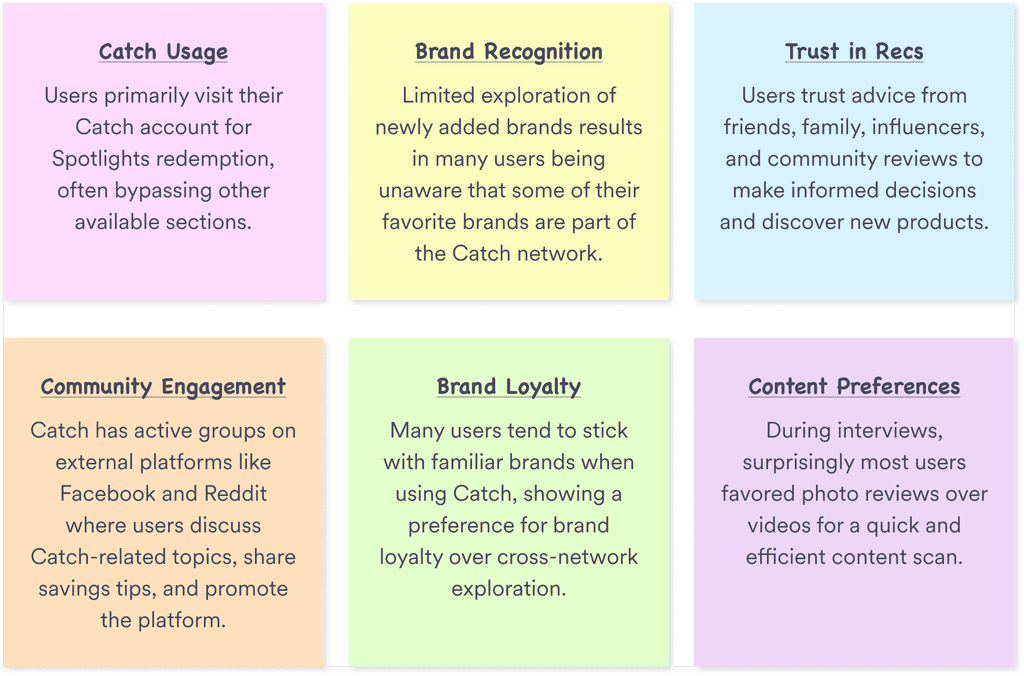
Discovery Phase Findings
These findings are distilled from a comprehensive analysis of past moderated and unmoderated user interviews, usability testing sessions, and surveys.
Hypothesis
Our goal is to transform Catch into a comprehensive shopping destination by addressing the user challenge of discovering new brands and products. By enhancing the platform's guidance capabilities, we aim to reduce users' reliance on external recommendations. This not only improves the overall user experience but also strengthens Catch's ability to attract, retain, and satisfy customers. The objective is to create an engaging and user-friendly environment, fostering long-term customer loyalty, and positioning Catch as the go-to platform for diverse and satisfying shopping experiences.
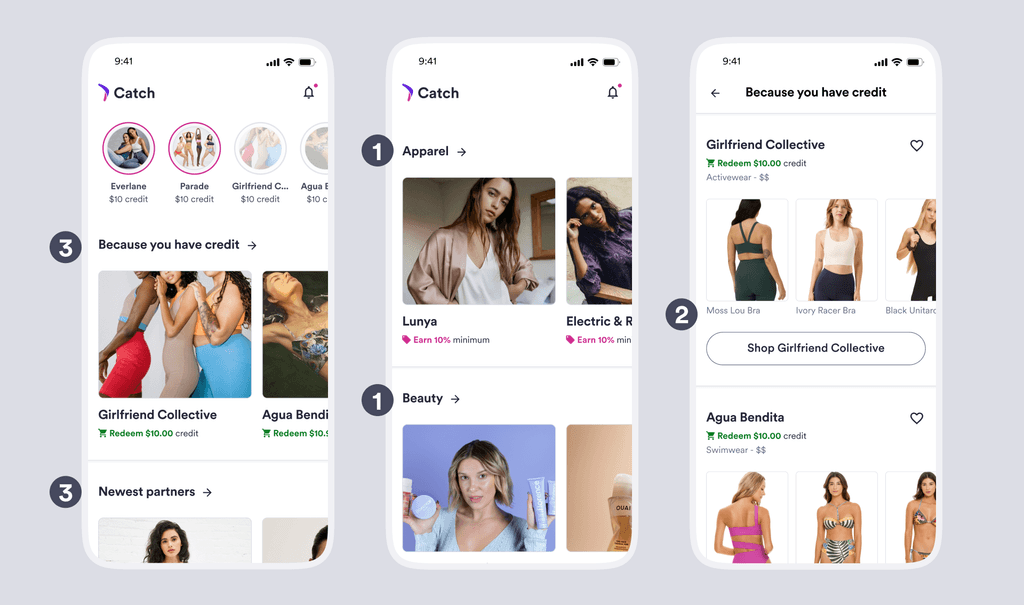
Current Design Pain Points
#1 Pain Point:
Generic categories lack personalization, failing to cater to individual user tastes. What works for one may not work for all users.
#2 Pain Point:
The absence of social proof leaves users uncertain about brands, prompting numerous off-app inquiries.
#3 Pain Point:
User engagement with current categories is limited, primarily focused on where they have existing credit and newly added brands.
#4 Pain Point:
Overall, users lack sufficient information to ignite interest in unfamiliar brands, validate their value, and confidently make a purchase.
Ideation
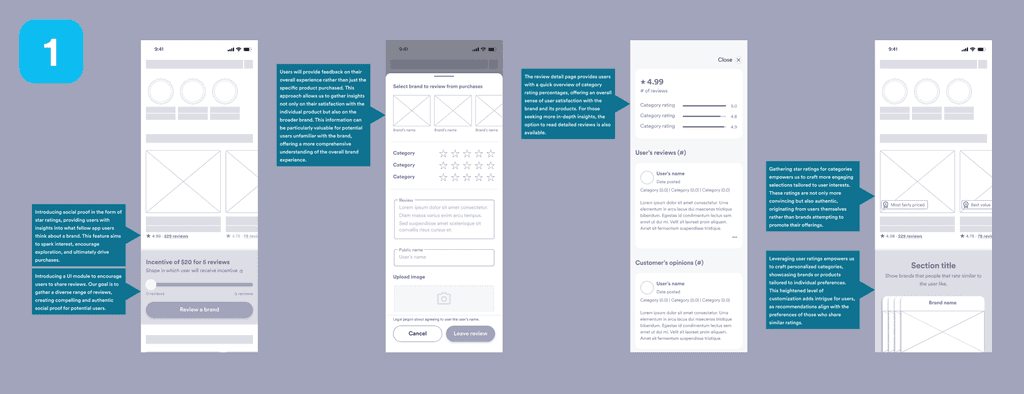
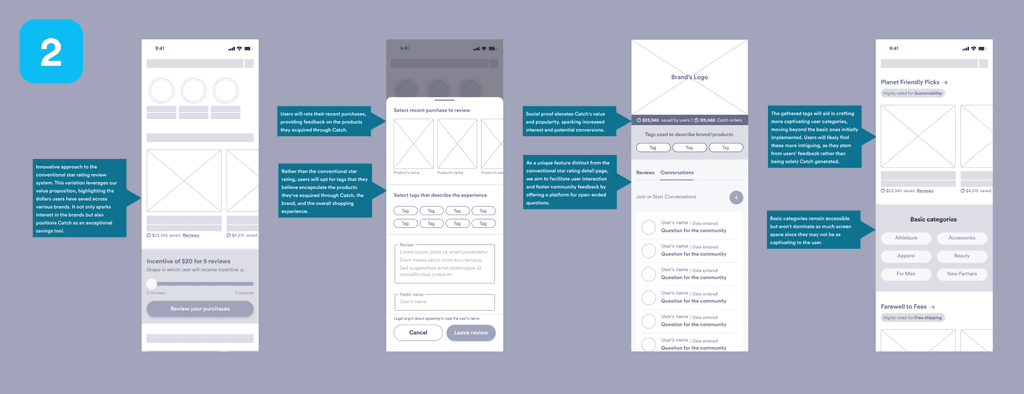
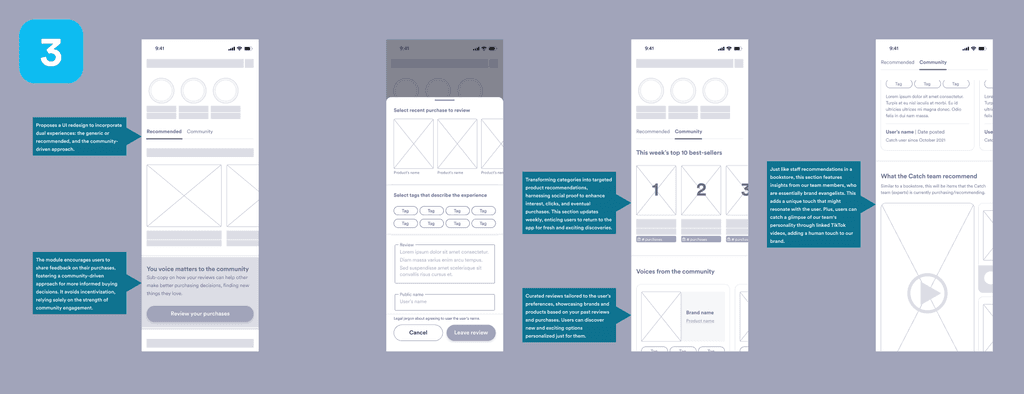
In the ideation phase, three distinctive routes were explored—Star-rated Reviews, Tagging System, and Community Tab—each designed to enhance the user experience in its unique way.
User Research Findings
Moderated user interviews were conducted to test and gather insights from current Catch users, ensuring alignment with their needs and preferences in exploring potential directions.
1-Reviewing
Users are comfortable submitting reviews when the process is seamless, confined within the app, and does not necessitate sharing sensitive information. While photos are optional, videos are a definite no-go.
2- Tags
Many users were pleasantly surprised by the unexpected tags, appreciating their quick and straightforward nature. Some users expressed a desire for improved grouping logic to enhance cohesion.
3-Categories
The majority of users found great value in the new categories and were pleasantly surprised. Some successfully connected the dots between the review tags and the newly introduced categories.
4- Conversations
Users found the conversation feature both thrilling and valuable, providing a more direct avenue to address their specific queries without navigating through the standard reviews.
5-Customized Sections
Users enjoy the personalization that comes with understanding their preferences. They appreciate tailored content aligned with their taste, with customized recs receiving a warm reception.
6- Community
Users responded enthusiastically to both community messaging and the benefits it brings to their experience. They value how the product becomes more organic, personal, and special.
Technical Limitations
Insights gathered from stakeholders, encompassing Product and Engineering, unveiled essential technical constraints that influenced the proposed design direction.
1-Review Management
Gathering and showcasing a significant number of reviews appears to be an intricate and manual process, suggesting we should reconsider the star rating idea.
2- Video Integration
Embedding videos from TikTok introduces additional complexities for both engineering and legal considerations, suggesting we should reconsider for V01.
3-Data Confidentiality
We are hesitant to display internal metrics on users' savings per brand or the number of orders.
4- Chat Implementation
Introducing a chat/conversation feature presents a substantial workload that is currently beyond our means.
5-Paid Feedback
Continuously incentivizing users for feedback is financially unfeasible.
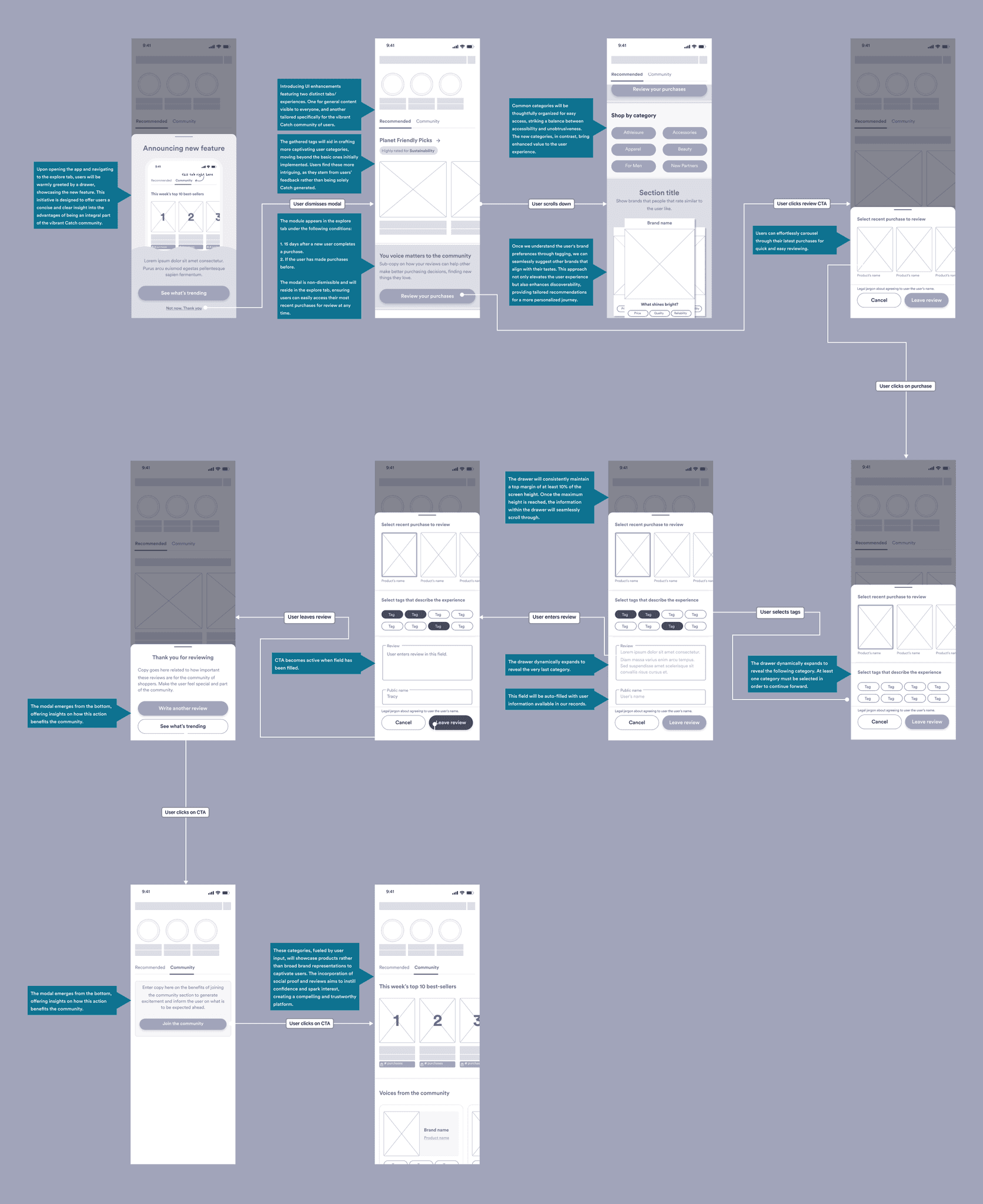
Proposed Direction/Flow
The proposed design direction seamlessly integrates user feedback, addresses concerns, and navigates internal technical constraints.
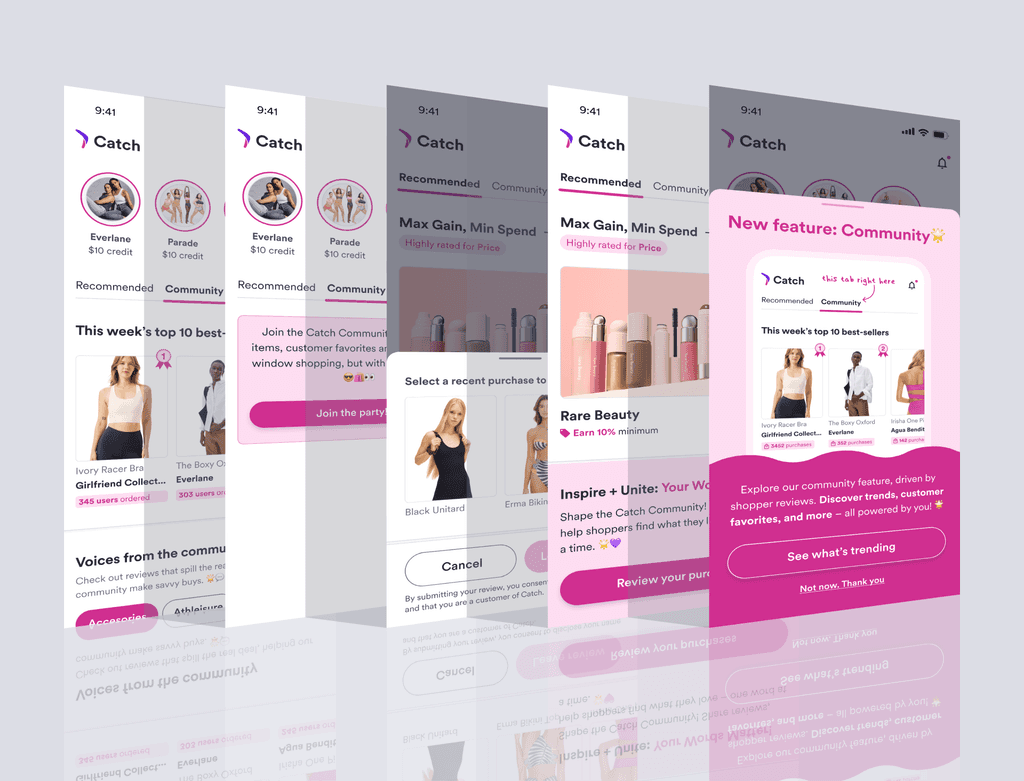
Proposed Final Look
Design Solution Rationale
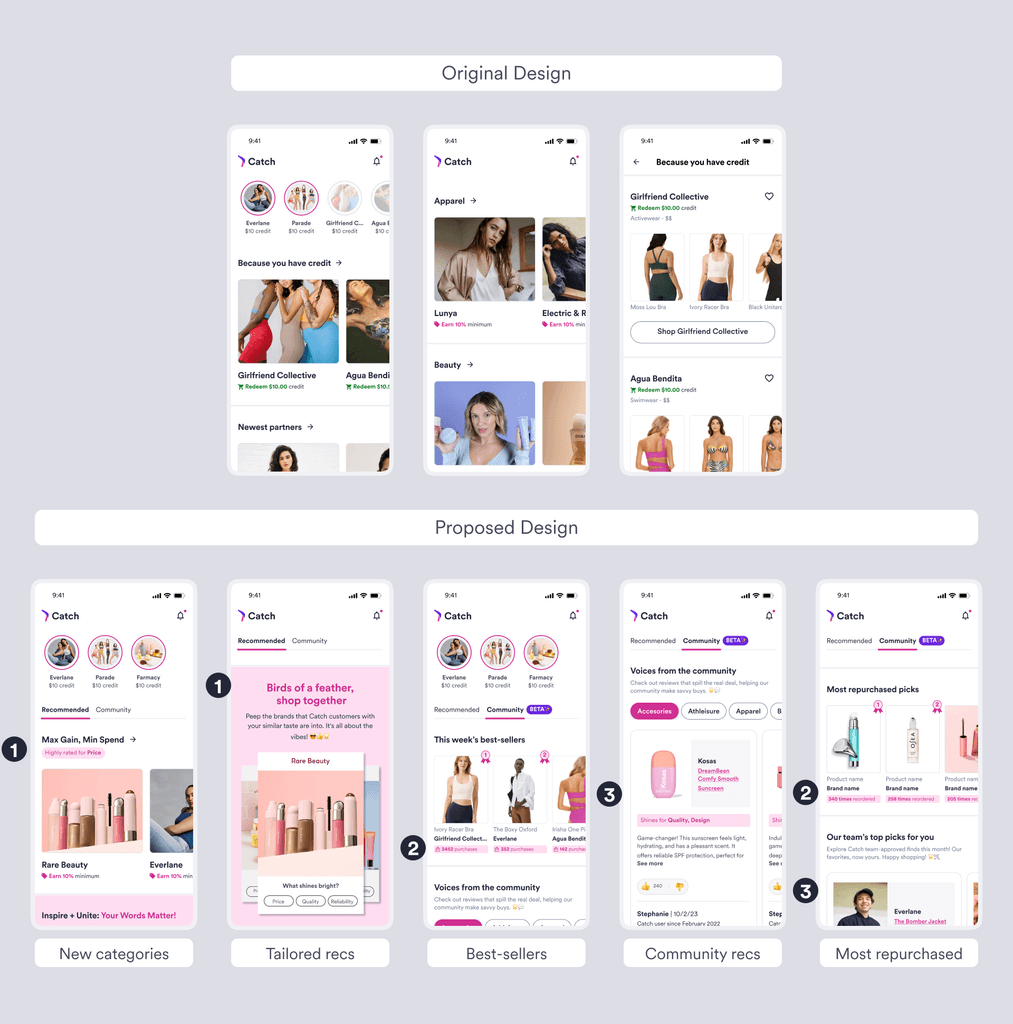
1-Elevated Discoverability through Community Power: Categories are now thoughtfully grouped to align with community interests, enhancing the user experience by making them more engaging and appealing. This strategic shift not only elevates discoverability but also encourages users to explore a broader range of categories, thereby facilitating a focused and enjoyable shopping search.
2-Enhanced Trust with Social Proof Features: The incorporation of social proof features significantly enhances user trust by providing valuable insights into trustworthy brands and products. Users are empowered to make secure and reliable purchasing decisions, as they can rely on the collective wisdom and experiences of the community, fostering a more trustworthy and informed shopping environment.
3-Optimized Shopping Decisions with Reviews: The introduction of reviews adds a layer of transparency to the shopping experience. By illuminating the preferences of the user community, the design guides individuals in making well-informed purchasing decisions. Understanding what others are buying and enjoying not only facilitates wise spending but also contributes to an optimized and personalized shopping journey for each user.