Persona Building at Zenreach
Roles
Research
User interviews
Consolidation of findings
Analysis
Design
Distribution
Deliverables
Posters
Cards
Videos
Problem
The personas developed at Zenreach a year ago, relying solely on feedback from account managers and customer service representatives, may contain inaccuracies and subjective interpretations rather than offering precise insights into user behavior. These insights are consistently used across Zenreach departments to inform business decisions, potentially impacting the health of the business.
Solution
Develop behavior-based personas to establish a shared language and understanding of our users, encompassing their needs, goals, and current behaviors.
This approach will facilitate more informed business decisions at Zenreach.
Additionally, prioritize understanding, empathy, and humanization of our users to create a more tailored and effective product that resonates with their needs and preferences.
Preliminary research
During the initial research phase, I focused on gathering comprehensive details for the personas, including their definition, purpose, types, and key elements to emphasize. Additionally, I conducted interviews with key stakeholders from various departments to involve them in the process and gain insights into their perspectives on the existing personas and how they influence business decisions.
Screening
Owners or GM's of small businesses
Marketing Managers or Marketing Director of medium to big businesses
IT Managers of medium to big businesses
Channel partners
Vice Presidents of Marketing of enterprise businesses
Recruiting
Sent 300+ emails to users on our mailing list
Made 30+ phones calls to small businesses
Collaborated with our own IT department to get some users from this segment
Involved our stakeholders to get some enterprise marketing participants
Interviews - Documentation - Analysis of Findings
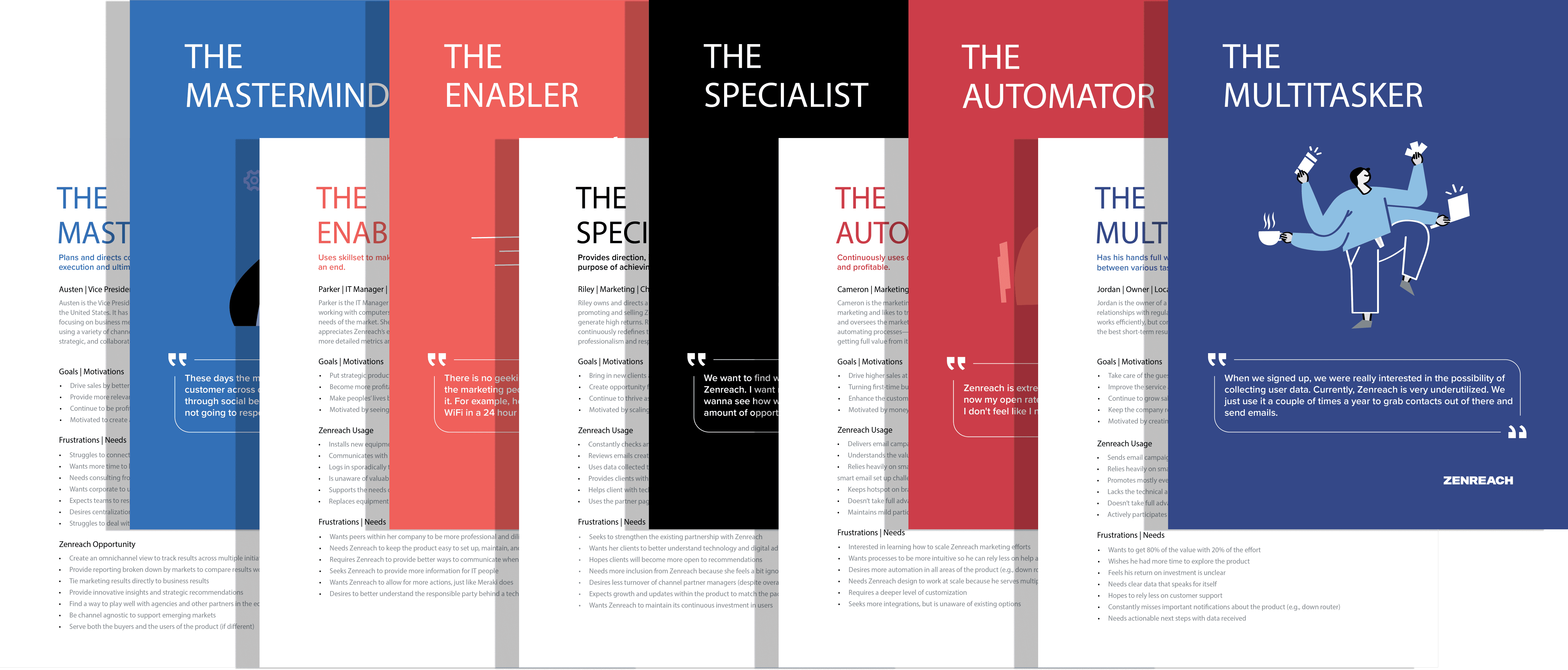
Interviews were conducted over a two-week period, revealing distinct patterns among participants early on. To align with the behavior-based approach, I opted to name each persona based on the exhibited behavior type:
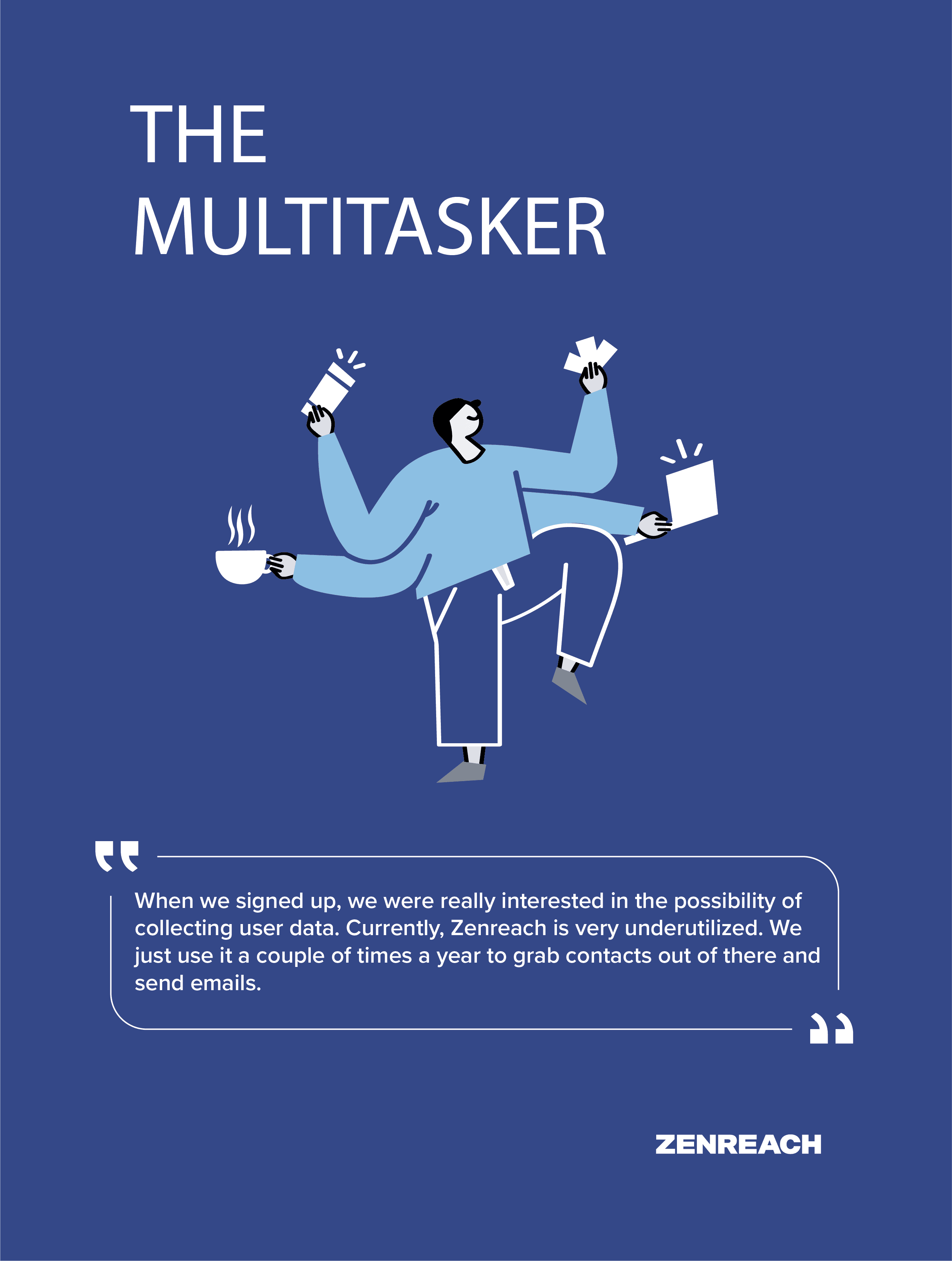
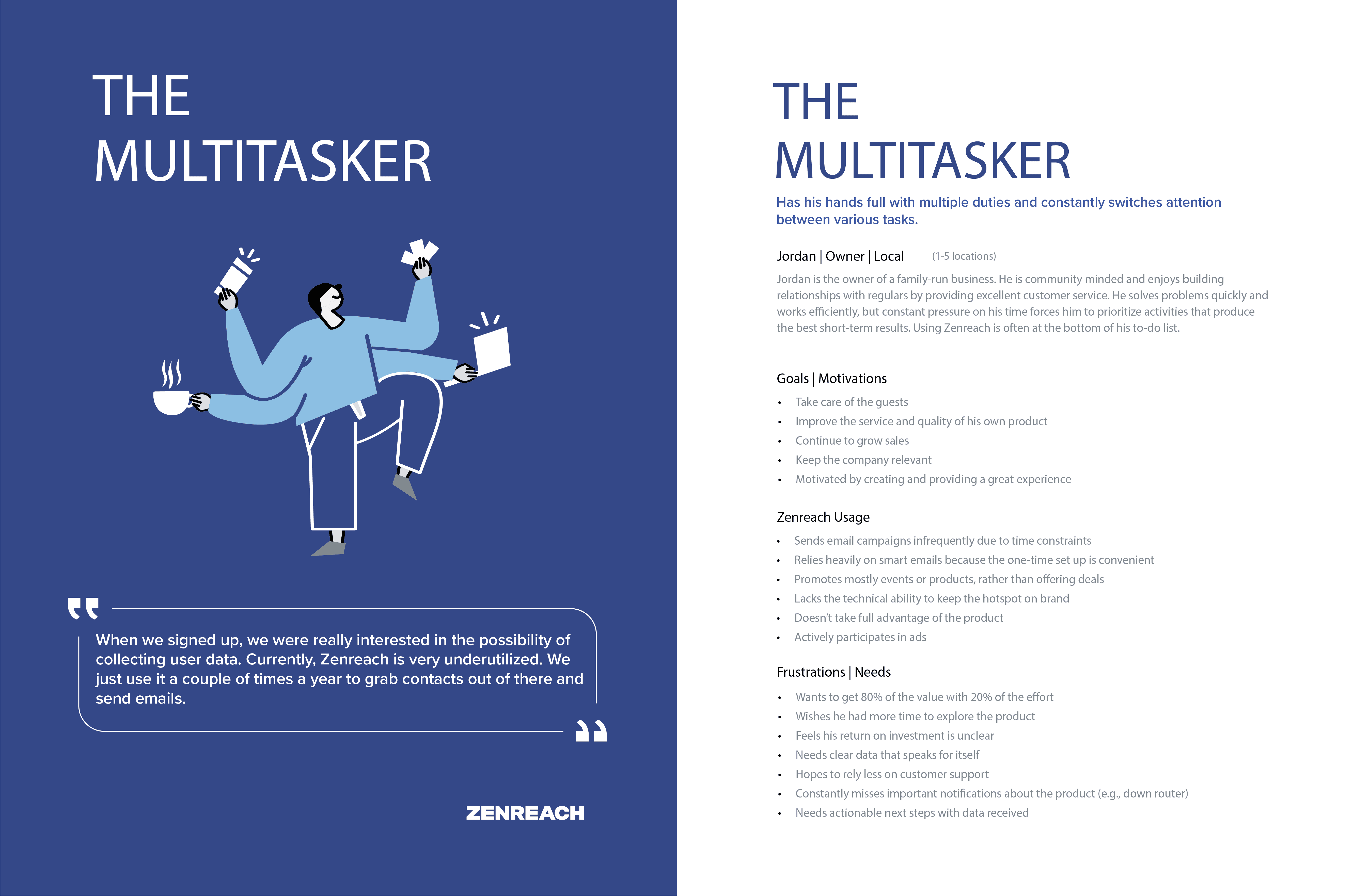
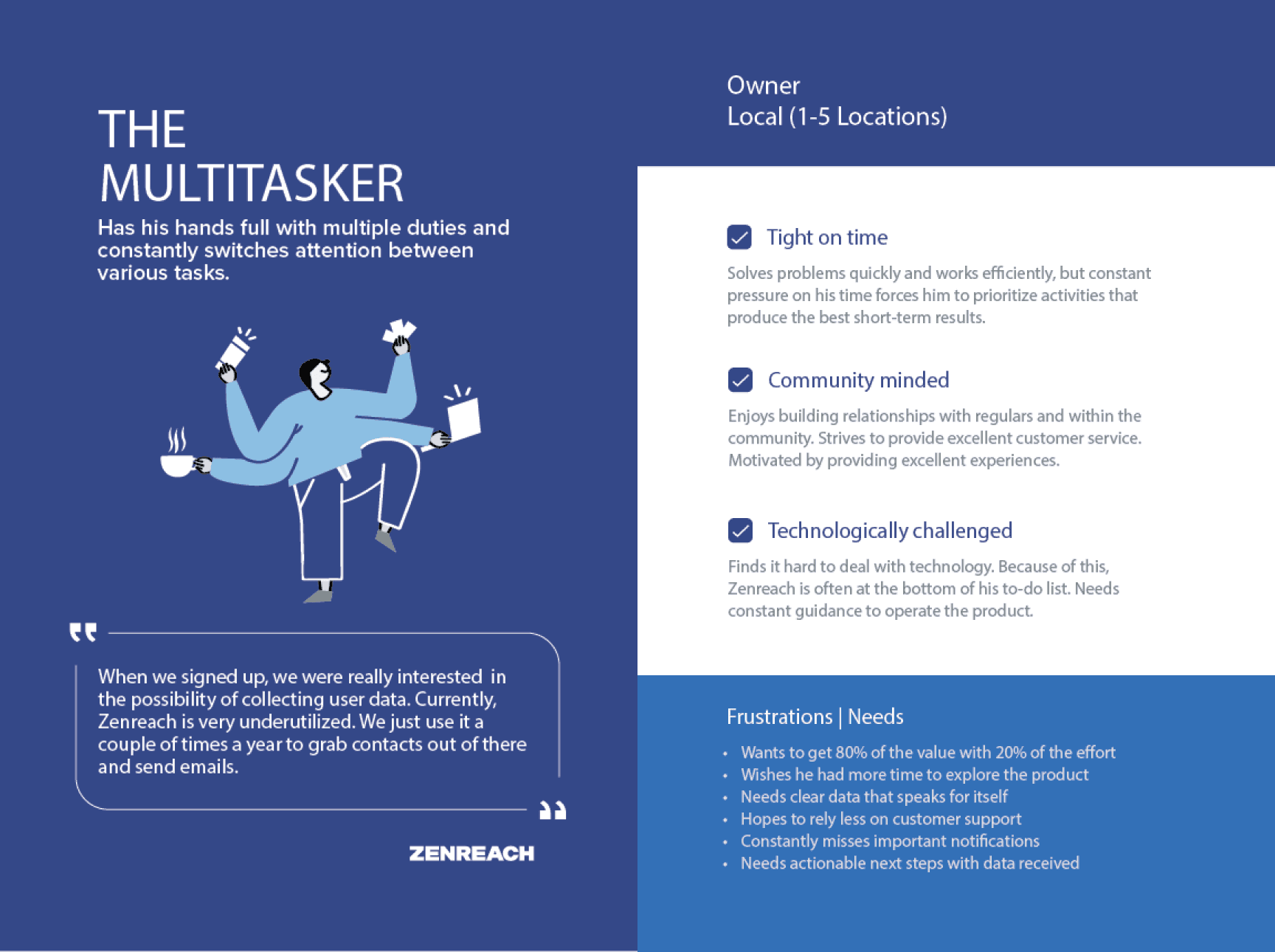
The Multitasker: Small business owner busy performing multiple duties and constantly switching attention between tasks.
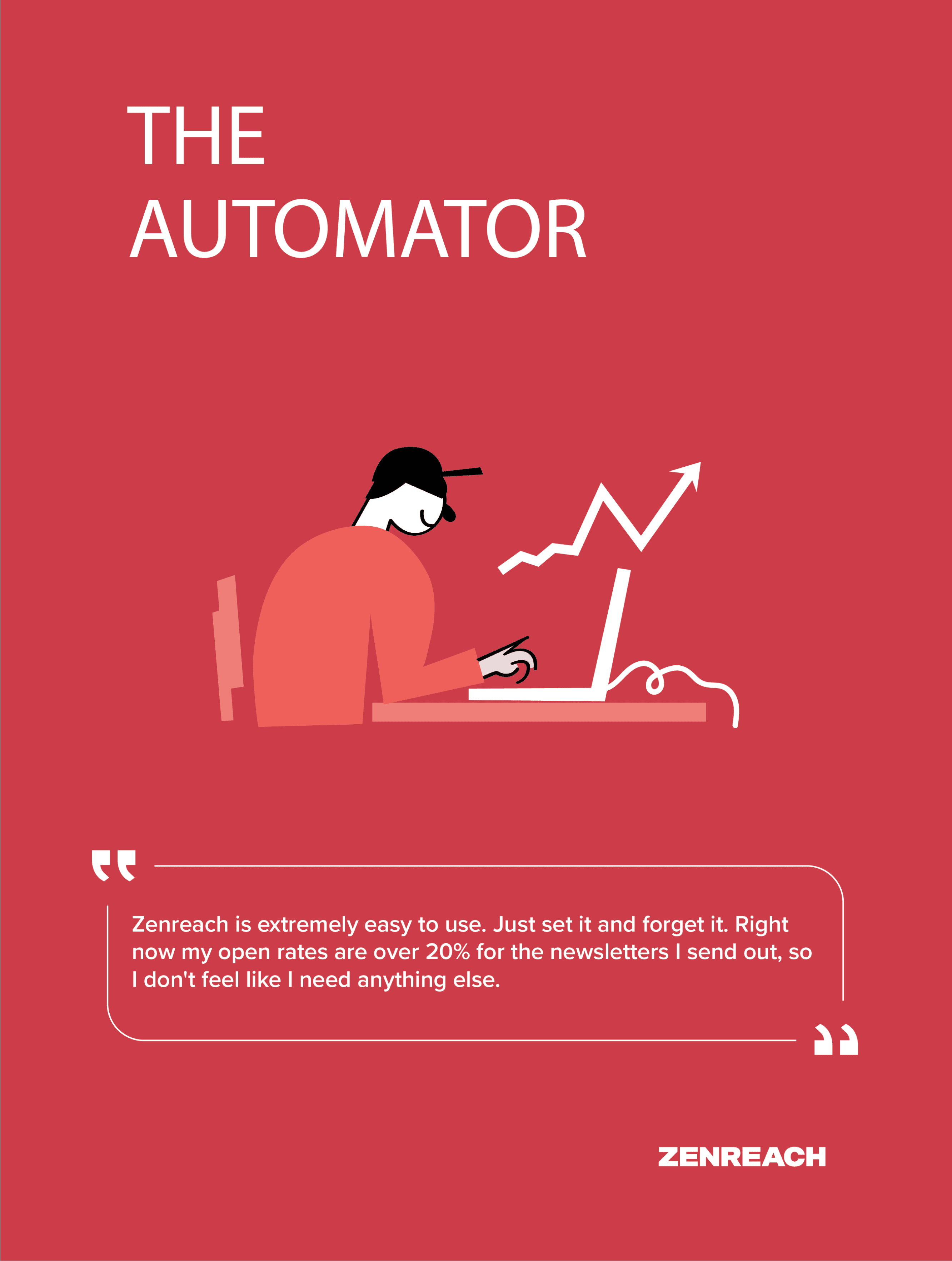
The Automator: Marketing professional obsessed with automation. Uses different tools to make the business more efficient and profitable.
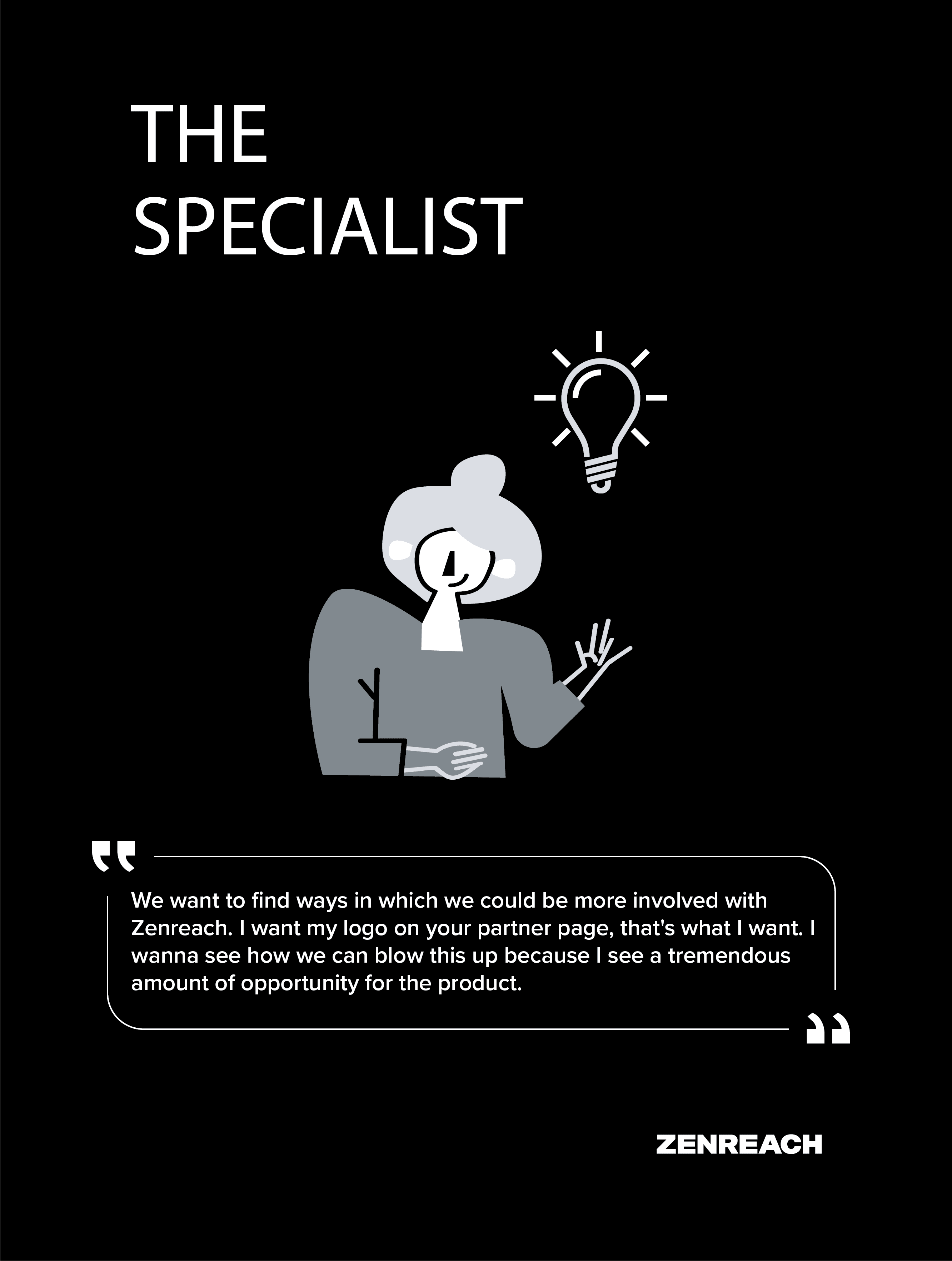
The Specialist: Known internally as a Channel Partner, this user is heavily involved with Zenreach introducing and selling the product to third parties.
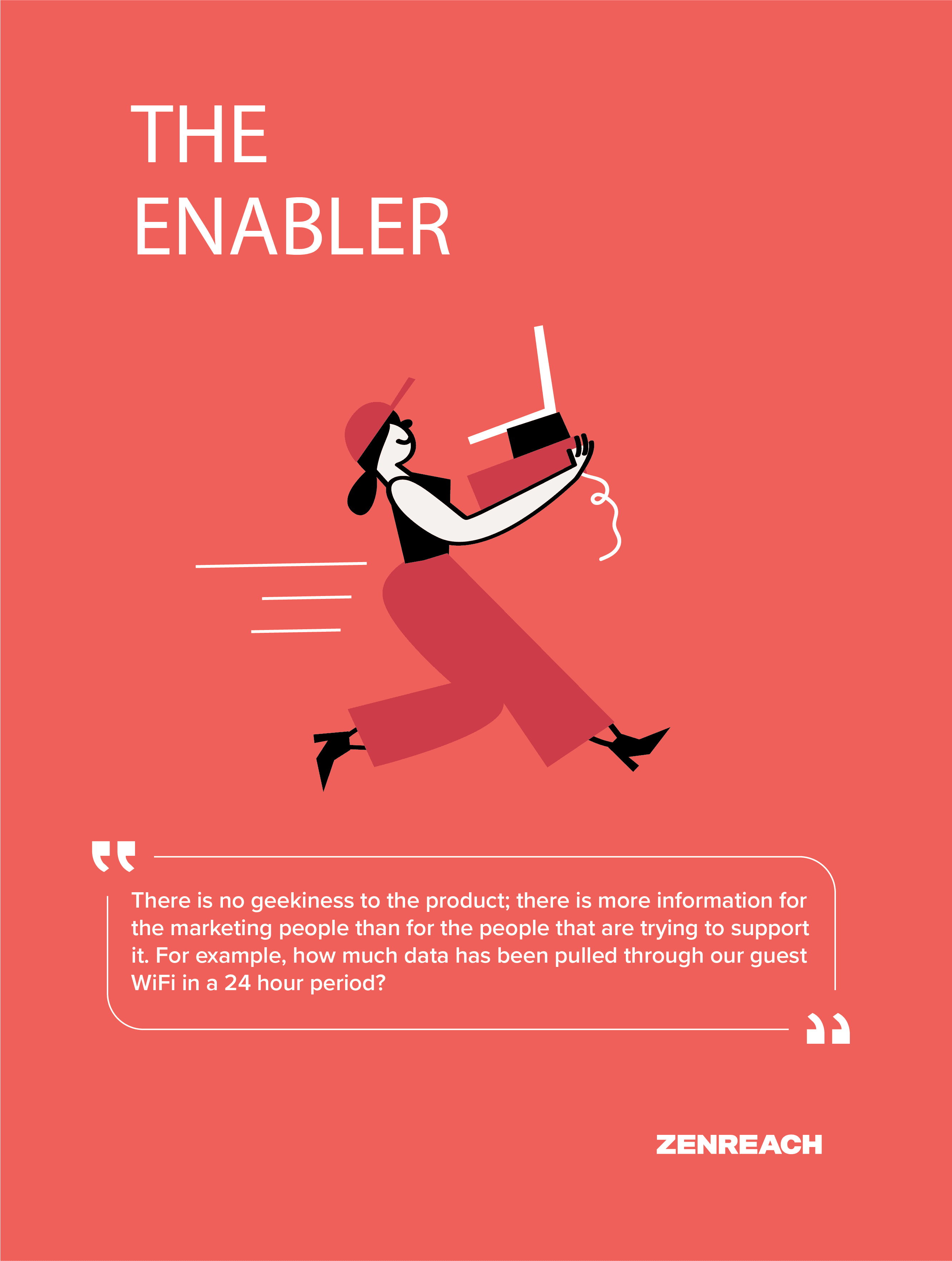
The Enabler: Also known as an IT specialist, they use their skillset to make something possible, empowering others to achieve an end.
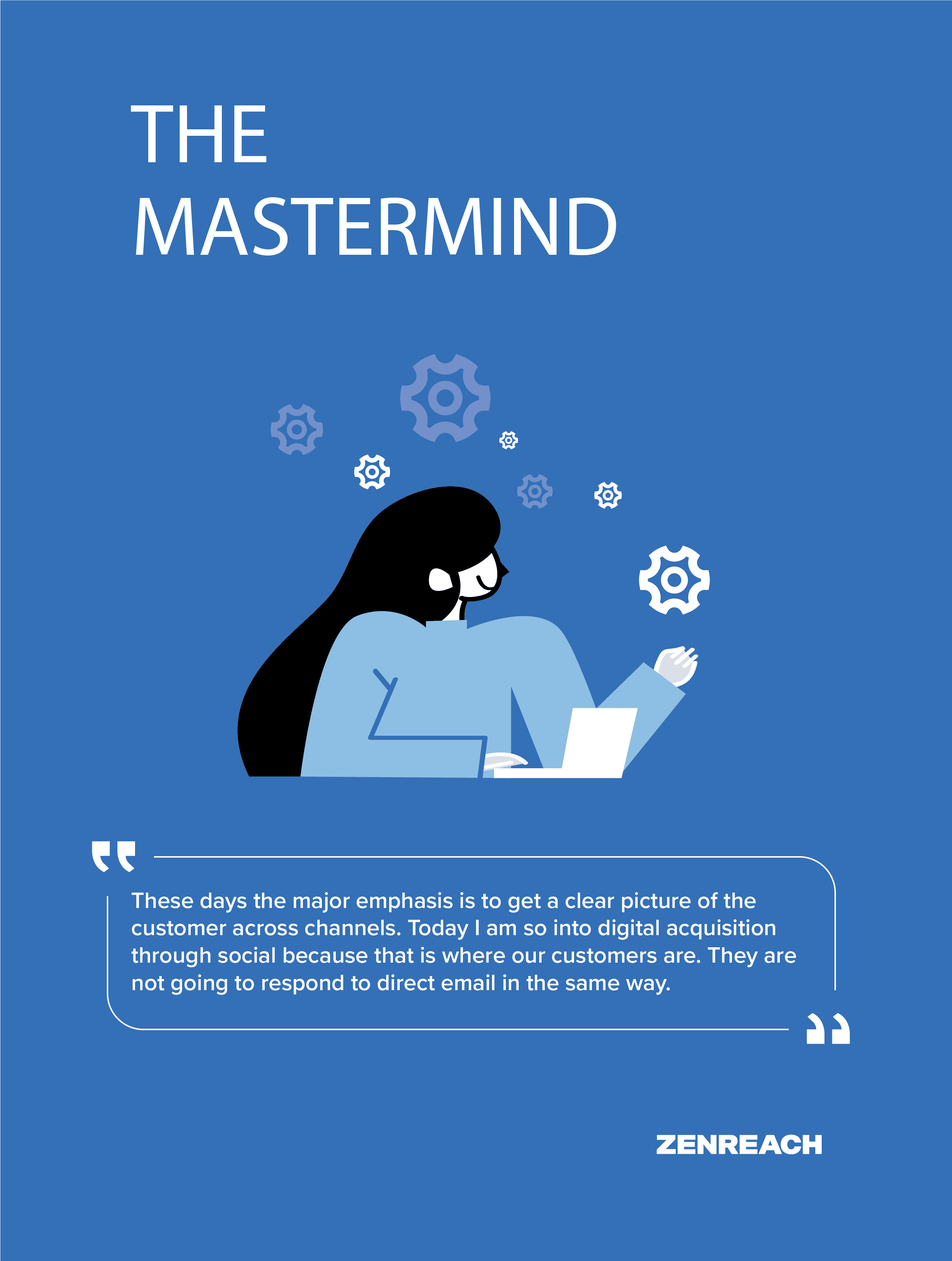
The Mastermind: A marketing expert that plans and directs complex operations and is primary responsible for their execution and ultimate performance.
User journeys
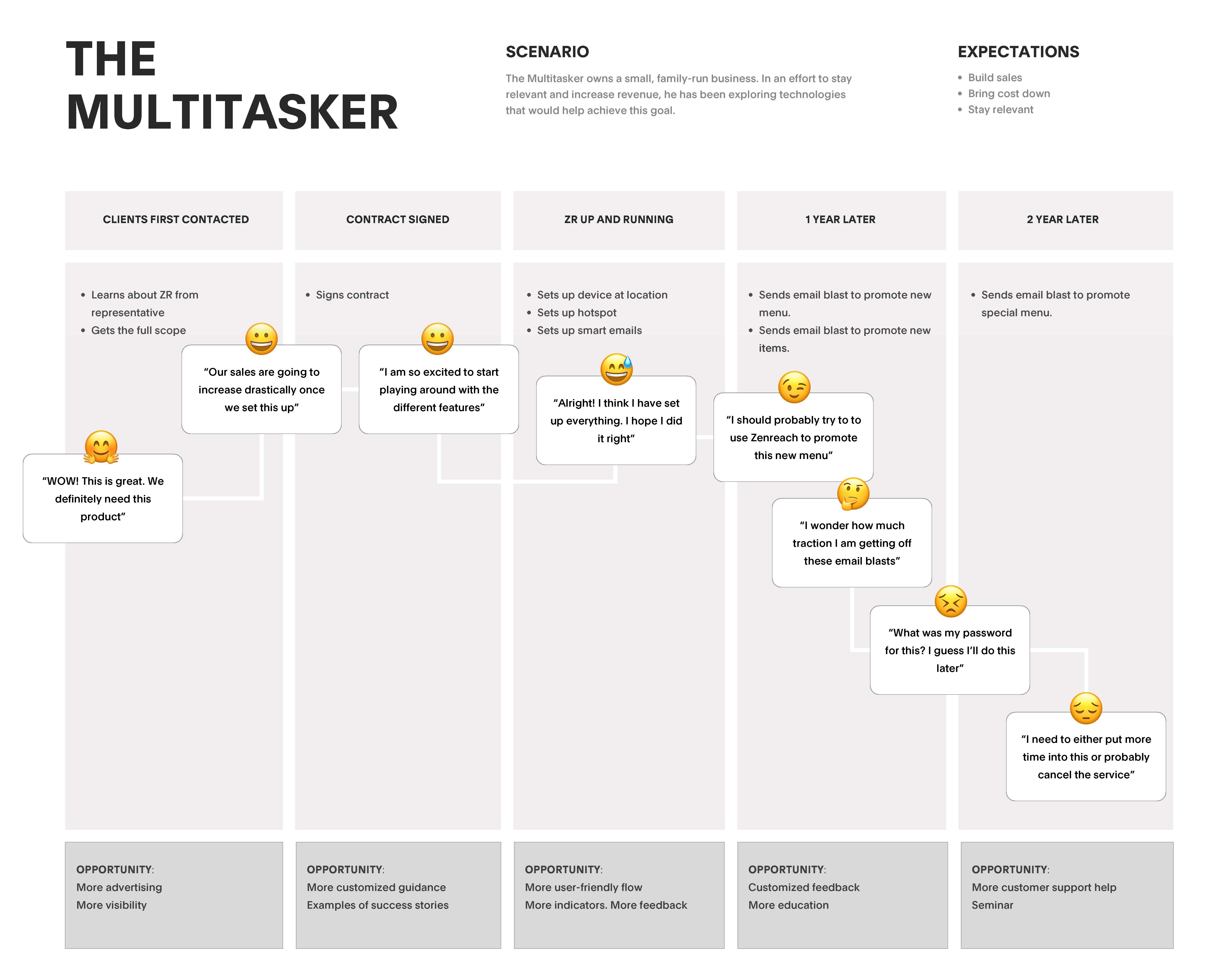
In order to better understand each one of the personas, I created user journey maps. This allowed me to pinpoint the sentiment of the users at every step of the product cycle. It also helped us understand the land of opportunity for each one of the personas.
Final Designs
Rationale and Distribution
After presenting to the stakeholders and implementing their feedback, it was time for design and distribution. We wanted the work to be shared broadly around the company, ensuring maximum engagement among our employees. For this reason, we decided to release the information in the following way:
Posters: Set of posters to be displayed in all three offices that would carry the most detail
Cards: Set of cards for each employee displaying important takeaways for quick reference
Videos: 1-minute videos that used our own employees to introduce the new personas to the team
Each one of these five videos were released daily during what we called “persona week”. They were distributed via email, and I also created a Slack channel for both distribution and Q&A. At the end of the week, we held a contest to test the knowledge of our employees on the new personas.
Recommendations
Due to the rapid changes our product–and the market–is experimenting, these personas may have to be updated within the next 1 to 2 years.
When the time comes for these peronas to be updated, recruitment needs to be readdressed and more participants need to be included in the study to make sure we have a good representation and understanding of all our users.
Keep track of behavioral changes in the current personas and document them.
Use this personas prior to making any business decision: “design for someone who doesn’t exist and you will have no customer”.