Increasing Conversion Upfunnel
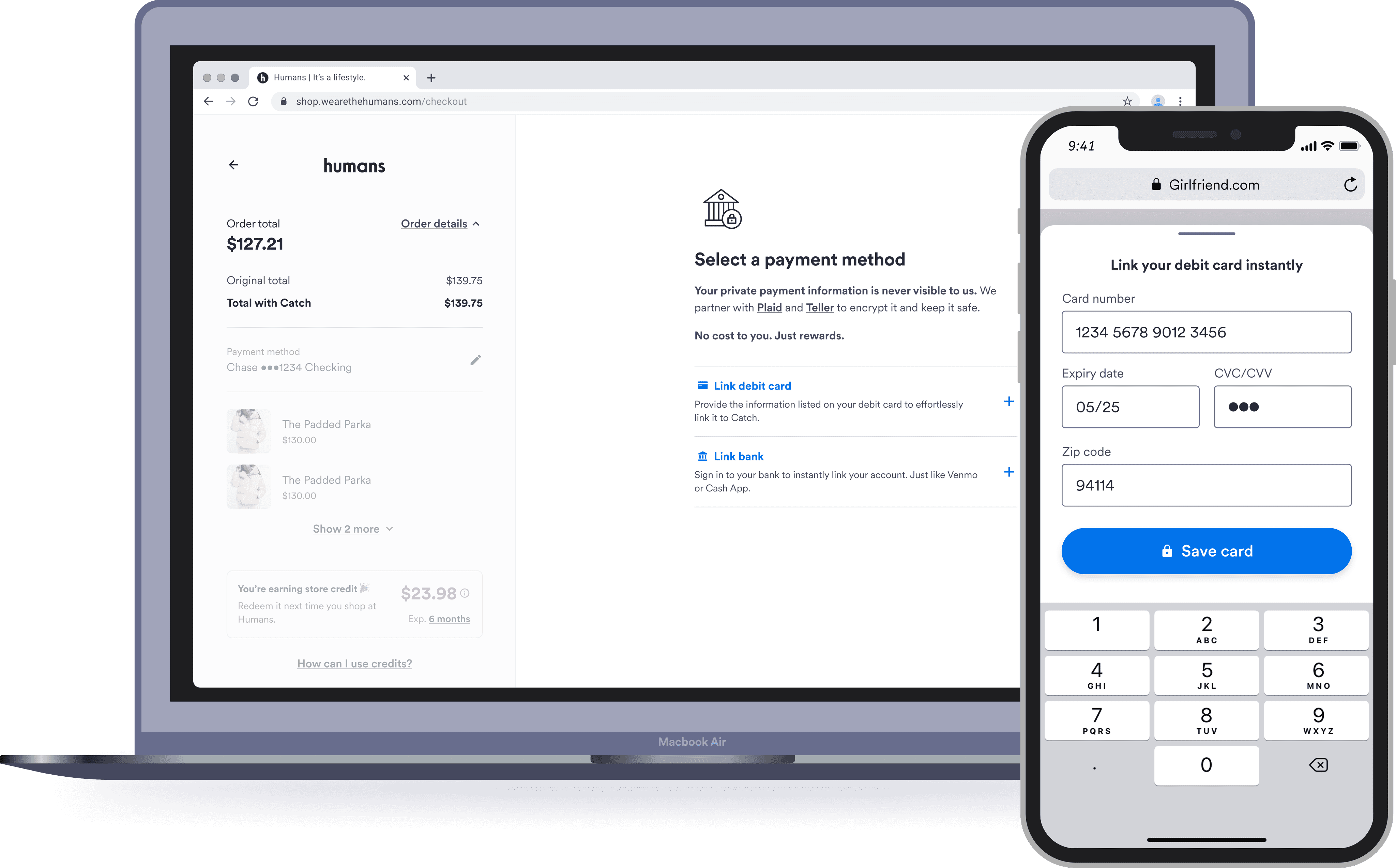
This project was made for Catch. Catch is an innovative rewards platform that benefits both users and merchants. Users earn store credit with each Catch payment, while merchants enjoy increased repeat business.
Let's dive into the results
30% increase in conversation rate
with more users progressing through the funnel
20% increase in purchase volume
with more users trusting us to complete their purchases
70% of users using debit today
ever since the feature's debut in July of 2022
Roles
Research
UX Design
Visual Design
Prototyping
Deliverables
Market Research
User Research
Usability Testing
Low-fidelity concept explorations
High-fidelity mockups, prototypes, specs
Problem
Users' reluctance to share financial information during sign-up leads to a decline in conversion rates, hindering user engagement and impeding business growth and survival in a competitive market.
Solution
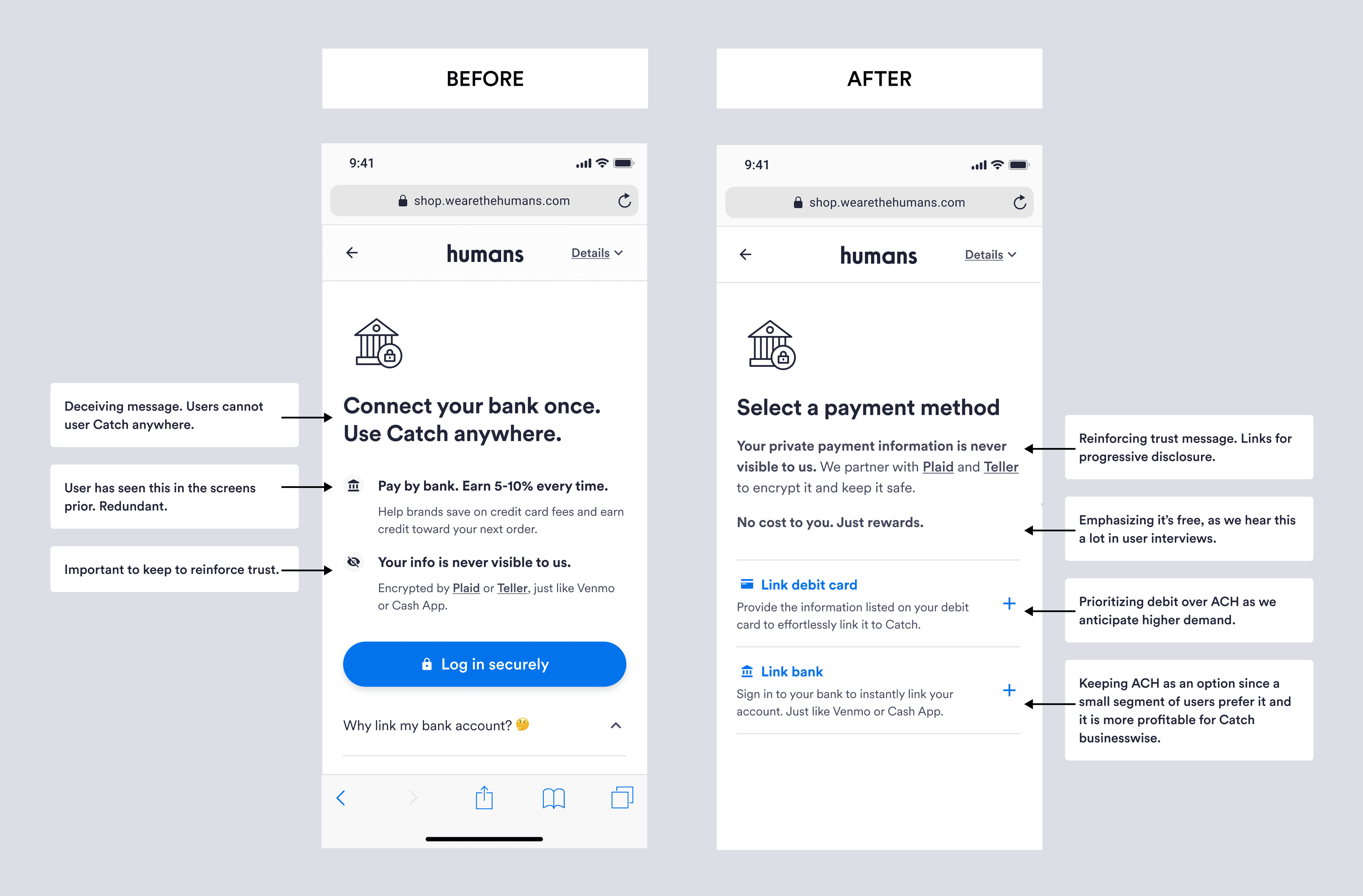
Introducing debit as a payment method:
- Increases alternative payment options from one to two
- Reduces friction by eliminating the need for users to share bank credentials
- Minimizes perceived fraud risk
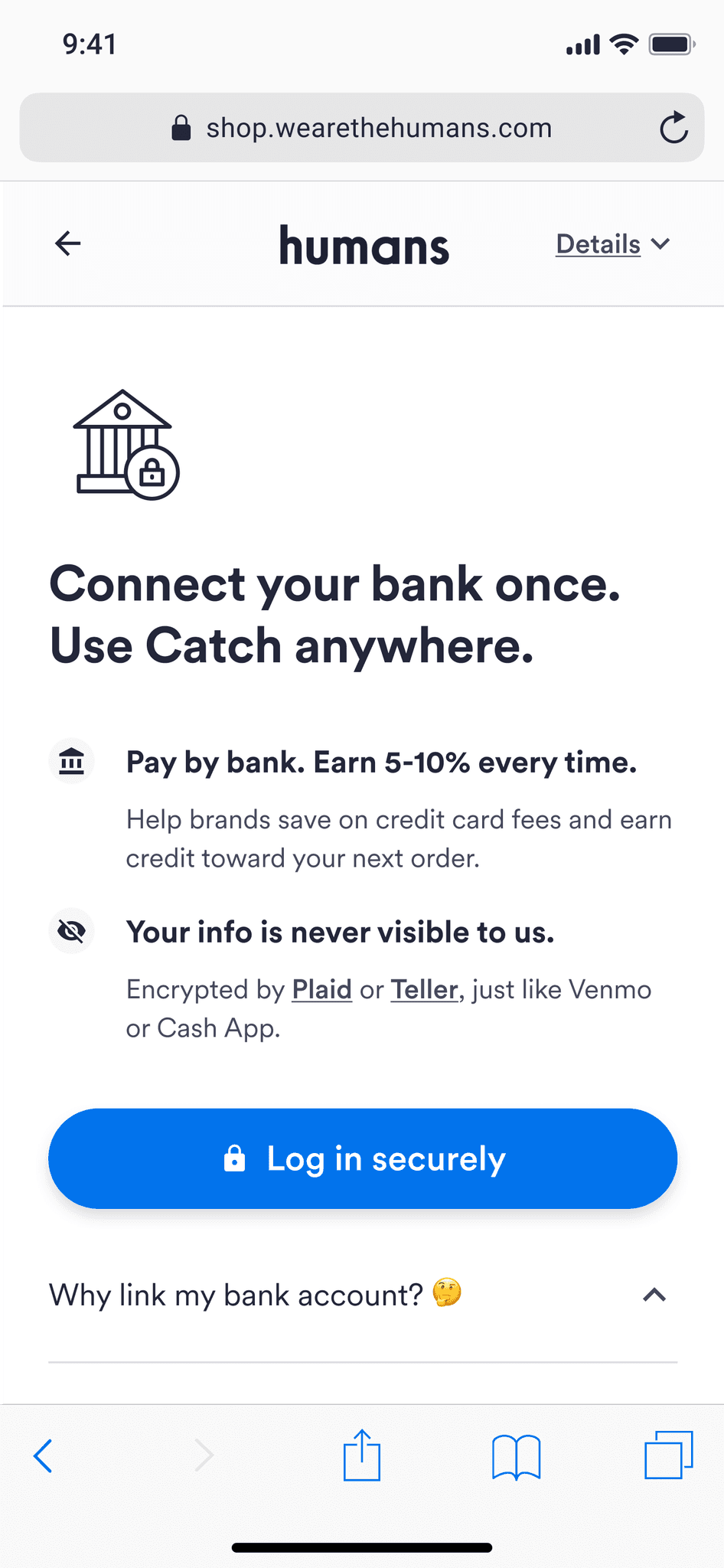
Additionally (and separately), implementing social proof at the early stages of the upfunnel
- Elevates user trust level in Catch early on
- Decreases hesitation when asked to provide payment information
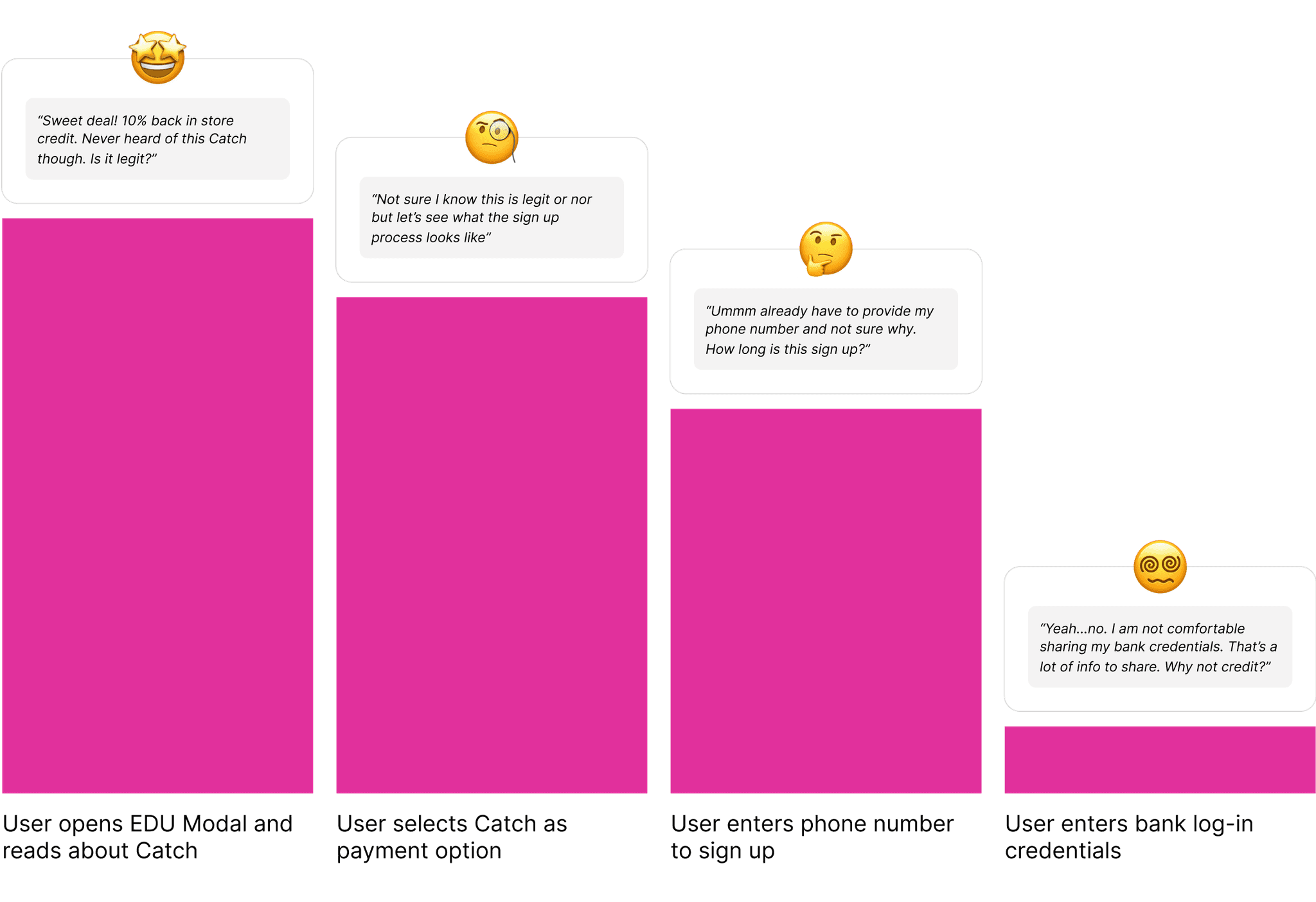
This visualization illustrates the former state of the upfunnel with integrated user feedback.
See full screen image
Hypothesis
Implementing a payment method that does not require sharing bank credentials and minimizes perceived fraud risks will further improve conversion rates during sign-up. Additionally, introducing more social proof early in the up-funnel will enhance user trust in the brand.
Challenges
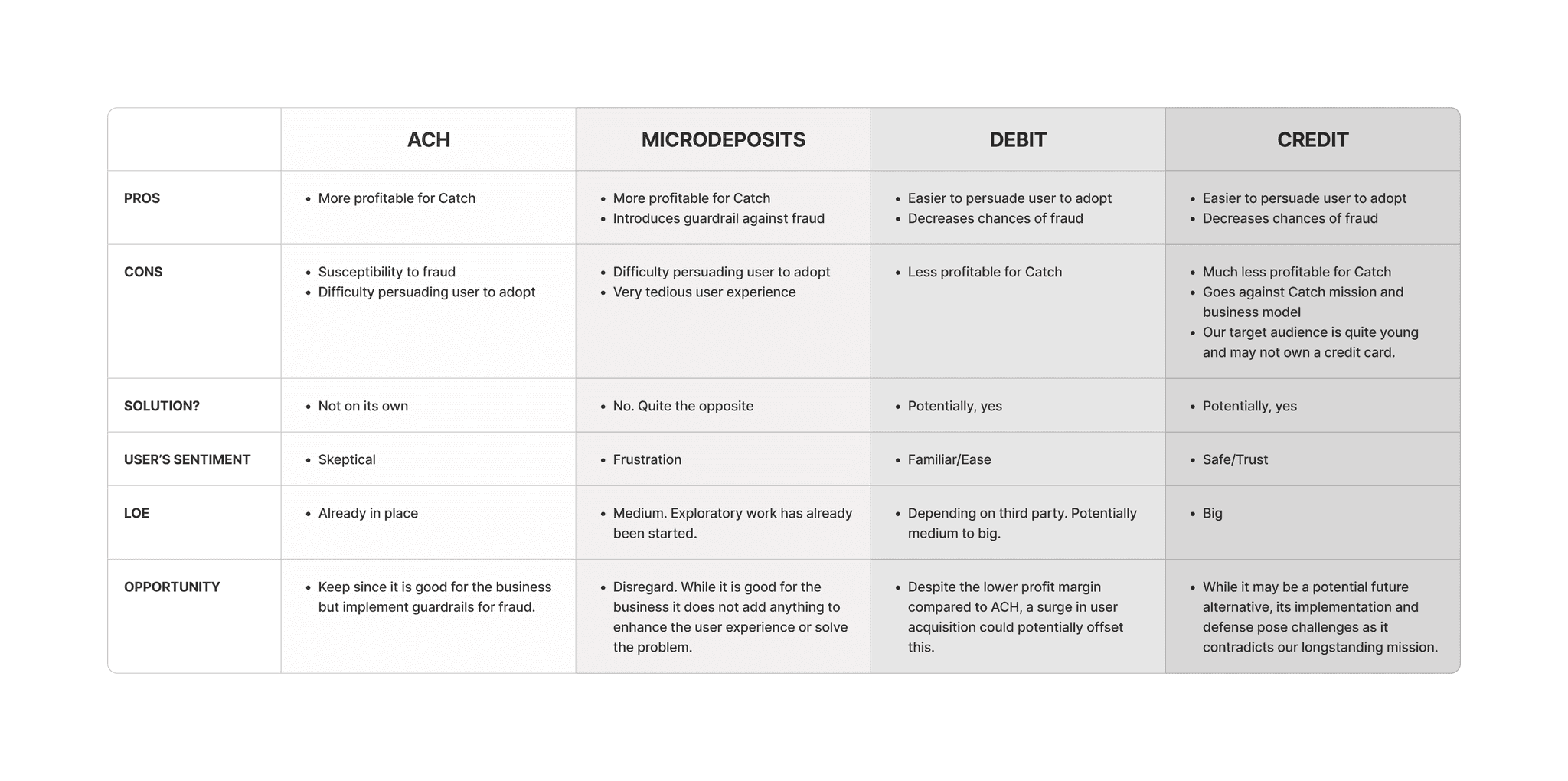
Developing a comparison chart enabled me to identify the challenges associated with each payment alternative and pinpoint areas of opportunity.
Wireframing
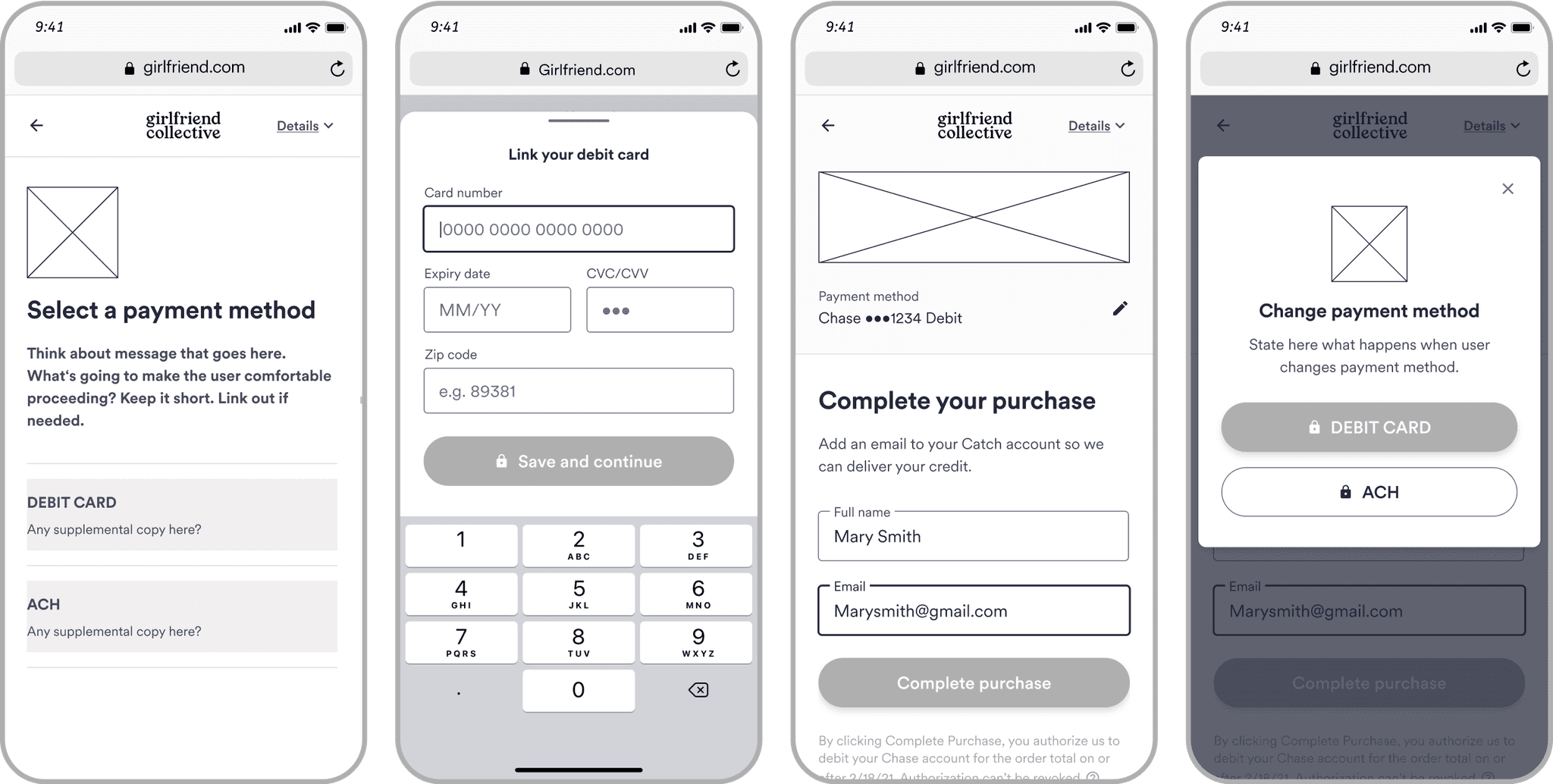
Considering the limitations of the vendor (Adyen), I began wireframing potential alternative routes, with debit emerging as the most promising option for implementation.
Voices from the users
I conducted usability testing to assess designs and flow, refining our direction based on the findings. Interviews were conducted with nine participants unaffiliated with Catch to minimize bias. Here are some of the highlights:
“I personally would link my debit card.I never linked my bank account just because I don't trust anybody. Or like if they were to keep charging me a bunch of fees or like cheat me some way, I wouldn't want them to have my account number or anything.”
“I think just like a debit card, it feels like just a little one layer, like one line of what, like one kind of step away from a direct account, whereas if I'm signing into my bank account, it feels like, okay, that's very direct. That's my actual bank account.”
Recommendations
Regularly monitor updates for Adyen components to optimize design efficiency.
Based on performance metrics, consider prioritizing debit payment options even more to minimize unnecessary clicks and enhance user experience.
Evaluate the potential impact and feasibility of introducing credit as a payment method, considering its potential benefits in fraud prevention and user acquisition, despite potential lower profit margins.